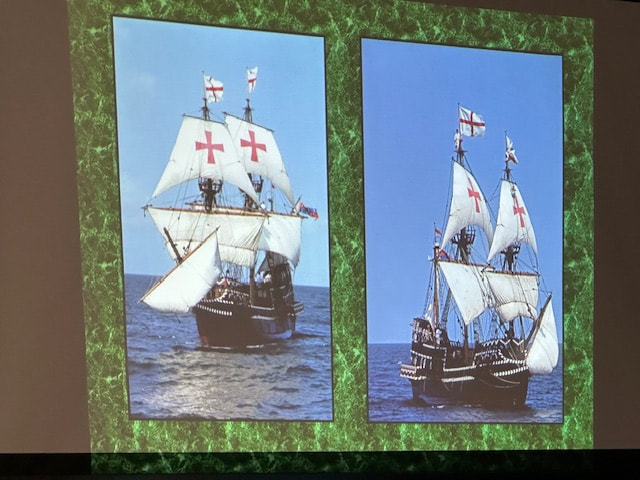
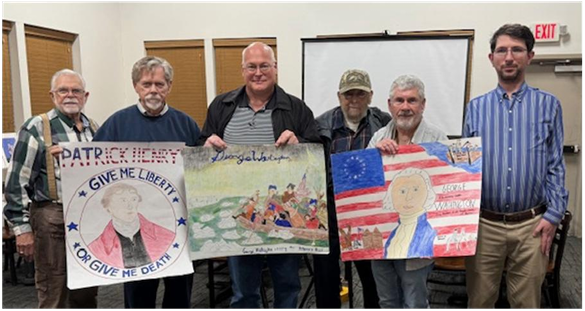
Even with the heat, Compatriot Boudreaux stated it was an amazing trip and something he would never forget. “The Golden Hinde” is now permanently moored at St. Mary Overie Dock in Southwark, London, England and is used as an educational history tour ship.Compatriots also voted on our James Huey Chapter Americanism Poster Contest with the 39 contestants from the Cedar Creek Elementary School in Ruston. 1st place went to Madeline Boyd and 2nd place went to Andy Slocum and 3rd place went to Reid Alexander. The certificates and prizes were presented to the winners on Friday, January 31st 2025 by Ted Brode and Fred Hamilton.
James Huey Chapter
West Monroe, LA
The origins of the James Huey Chapter trace back to a deep appreciation for heritage and patriotism. Inspired by family stories of Revolutionary War service, the idea of forming a new chapter began to take shape in 2008 when several prospective members joined the Sons of the American Revolution. After attending the 2009 Louisiana Society meeting and hearing plans for statewide growth, the vision for a chapter in Ouachita Parish emerged. Research into local history revealed James Huey, a Revolutionary War veteran who fought at Cowpens and Eutaw Springs, later settling in Ouachita Parish. His legacy became the cornerstone for the chapter’s identity.
Research and Naming
Determined to honor a local patriot, members uncovered Huey’s pension application and land grant records, confirming his presence in the region. Further investigation led to the discovery of his burial site near Indian Village. With assistance from local genealogists and volunteers, a headstone was placed at Bryan Cemetery in August 2009, drawing statewide attention and sparking enthusiasm for the new chapter. This effort symbolized the chapter’s commitment to preserving history and honoring those who served.
Formation
By late 2009, recruitment efforts brought together enough members to meet the requirements for chartering. On March 23, 2010, the chapter officially adopted its name and bylaws, electing officers and celebrating its formation. The charter was signed on April 27, 2010, marking the first new chapter in Louisiana in over a decade. The James Huey Chapter quickly became a vibrant part of the Louisiana Society, dedicated to education, community service, and patriotic recognition.
Click Here to see the extended historical narrative.
News and Events
-
James Huey Chapter January Meeting (January 24, 2025)
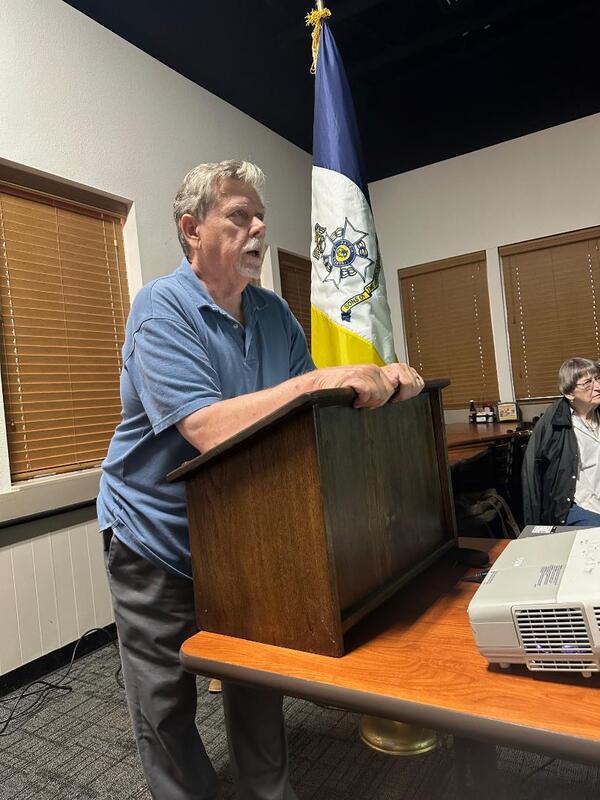
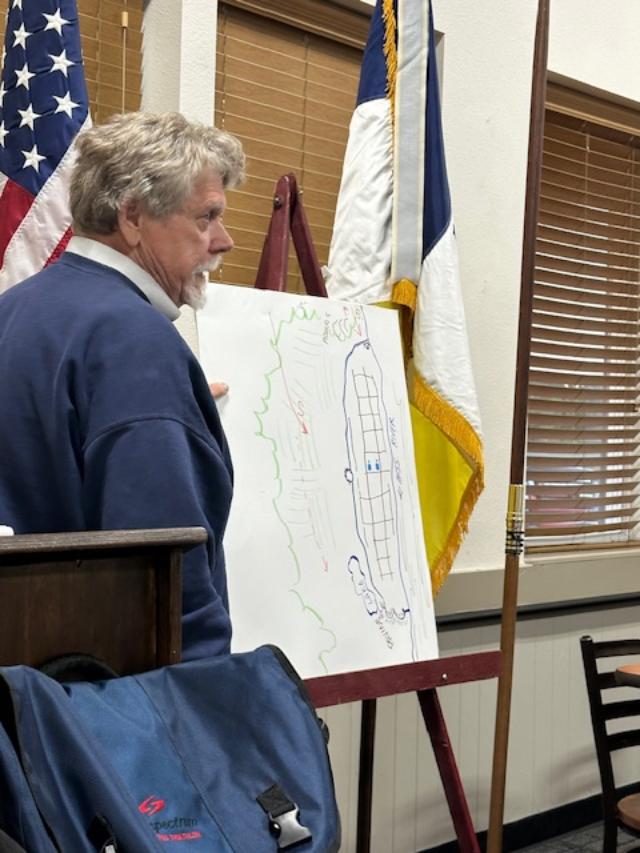
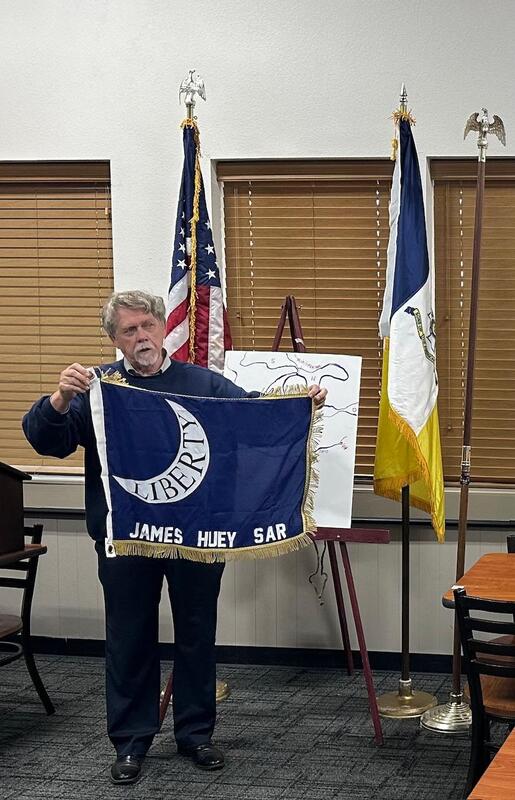
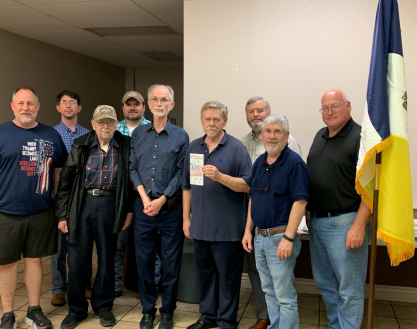
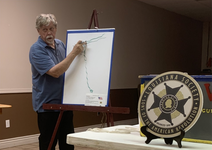
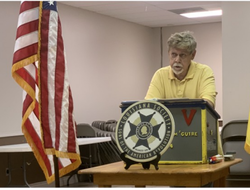
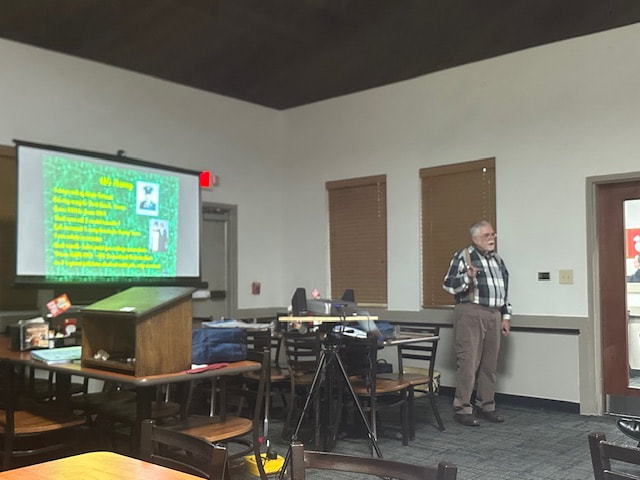
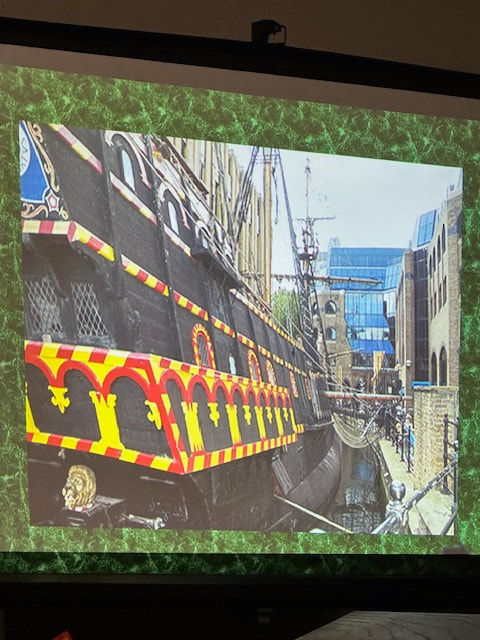
At our January meeting, our new member Rocky Boudreaux a photographer who shared his work in July 1989 with the replica ship and re-enacting crew commemorating the circumnavigation of the world by Captain Drake and his ship “The Golden Hinde” from Galveston Texas to Lake Charles Louisiana. Sir Francis Drake navigated the world 1577-1580 and claimed California for Queen Elizabeth I in 1579. Compatriot Boudreaux stated the trip took place in the hot July weather in the Gulf and with the ship sailing with the wind and you experienced very little breeze on deck where they would sleep at night to escape the heat.
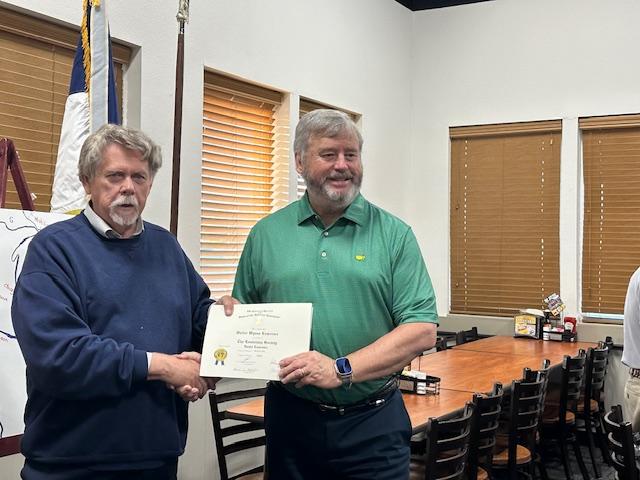
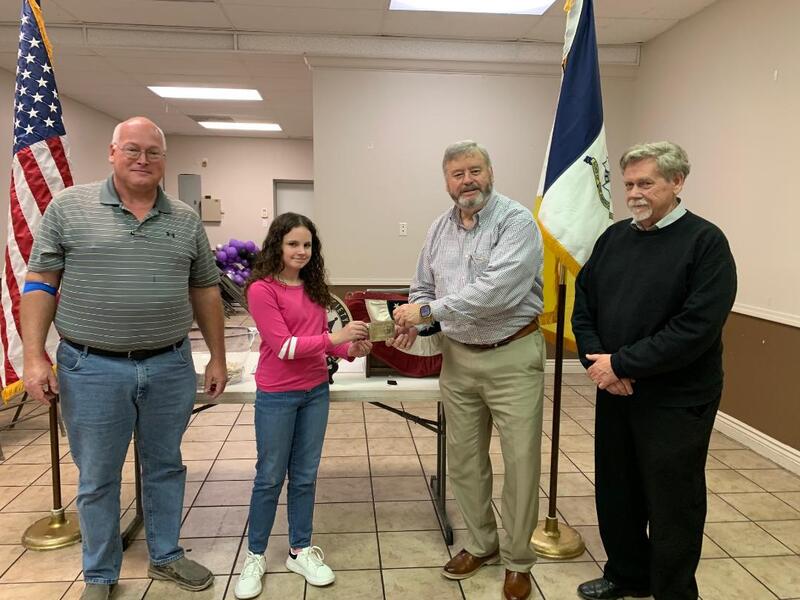
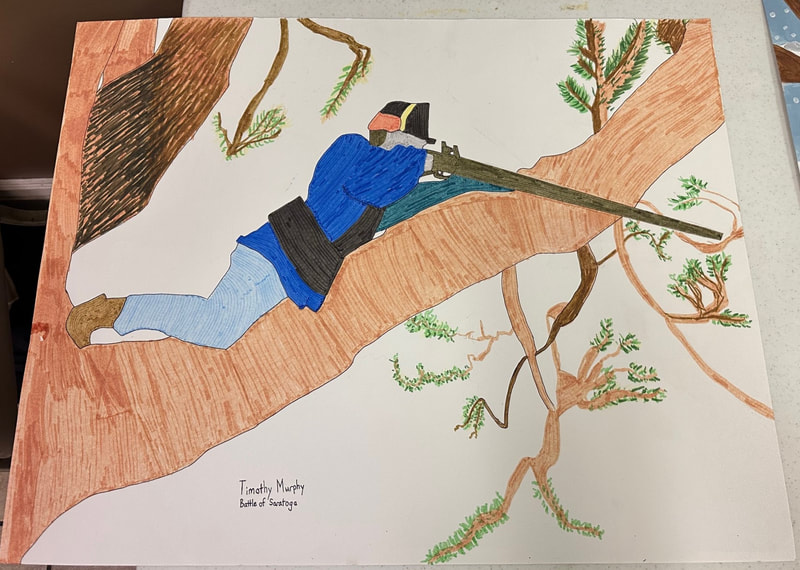
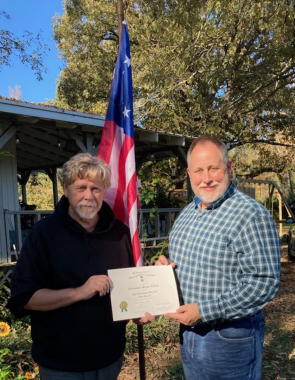
Even with the heat, Compatriot Boudreaux stated it was an amazing trip and something he would never forget. “The Golden Hinde” is now permanently moored at St. Mary Overie Dock in Southwark, London, England and is used as an educational history tour ship.Compatriots also voted on our James Huey Chapter Americanism Poster Contest with the 39 contestants from the Cedar Creek Elementary School in Ruston. 1st place went to Madeline Boyd and 2nd place went to Andy Slocum and 3rd place went to Reid Alexander. The certificates and prizes were presented to the winners on Friday, January 31st 2025 by Ted Brode and Fred Hamilton.
-
Members of the James Huey Chapter & Ladies Auxiliary (December 13, 2024)
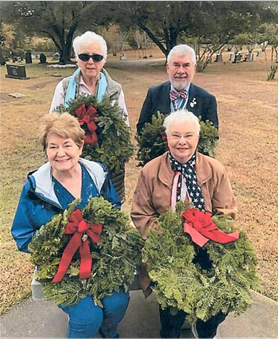
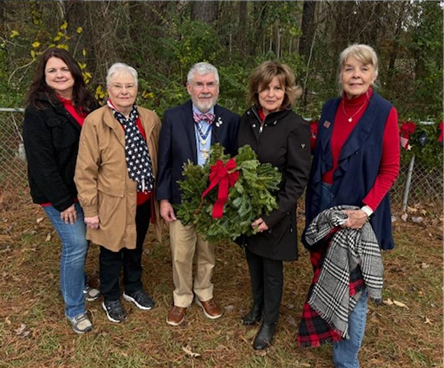
James Huey Chapter members & Ladies Auxiliary worked in coordination with D’Arbonne Chapter LSDAR, Long Leaf Pine Chapter LSDAR placed 33 Wreaths at Kilpatrick Memorial Gardens in Ruston in Lincoln Parish and approximately 70 wreaths at the Downsville Cemetery in Union Parish. James Huey Chapter President, Ted Brode, & Phyllis Brode, NSSAR Ladies Auxiliary Member, with the D’Arbonne Chapter LSDAR and members of the Northeast Brigade of the SCV where 100 wreaths were placed in the Bernice Cemetery in Union Parish.
Over 4.600 locations across the United States participated in Wreaths Across America to Remember, Honor, & Teach. This Wreath laying event began at Arlington National Cemetery in 1992 by Maine businessman Morrill Worcester. Our Country was founded on the ideas of Freedom, Justice, & Equality. We thank those who served and those who fell defending these ideals. We shall not forget!
Pictured in Back Row L-R: Lou Taylor and Fred Hamilton; Front Row L-R: Rebecca Haley & Freida Hamilton.
Pictured L-R: Linda Pardue, Freida Hamilton, Fred Hamilton, Fran McKenzie, & Donna Packer
-
James Huey Chapter Holiday Meeting (NOV 23, 2024)
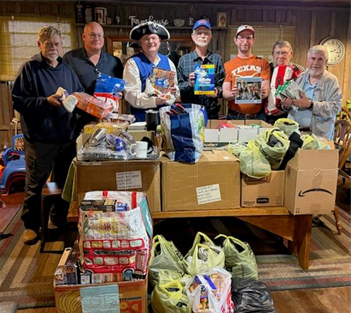
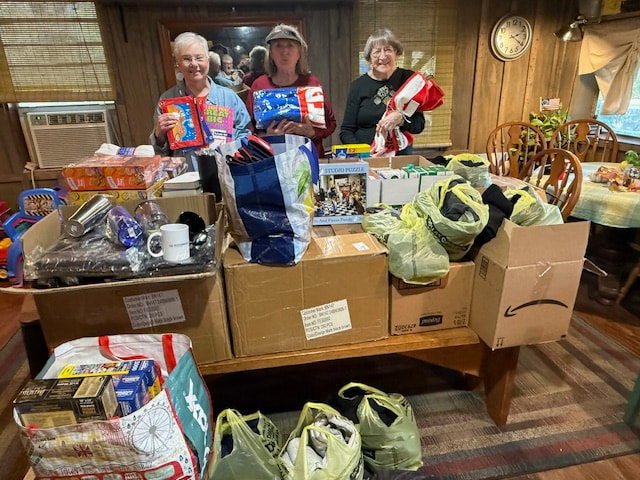
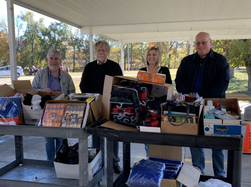
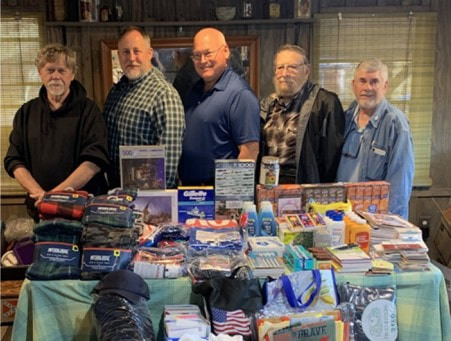
Our annual holiday meeting was held on Saturday, November 23rd at the home of Chapter President Ted Brode and his wife Phylis who invited the membership for a delicious Thanksgiving meal. Members brought donations for the veterans who live at the Northeast Louisiana Veterans Home in Monroe. Over 1,631 items were collected which was our best year yet! We couldn’t have done it without help from our Ladies Auxiliary. Pictured L-R: Chapter President Ted Brode, Steve Ray, Eddie Emory, Robert Hendrick, Stephen Hendrick, Gerald Graves, and Fred Hamilton. Ladies Auxiliary Pictured L-R: Freida Hamilton, Phyllis Thompson, and Merle Graves.
-
James Huey Chapter Supports Chennault Fest (October 26, 2024)
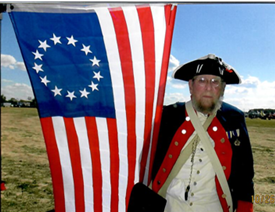
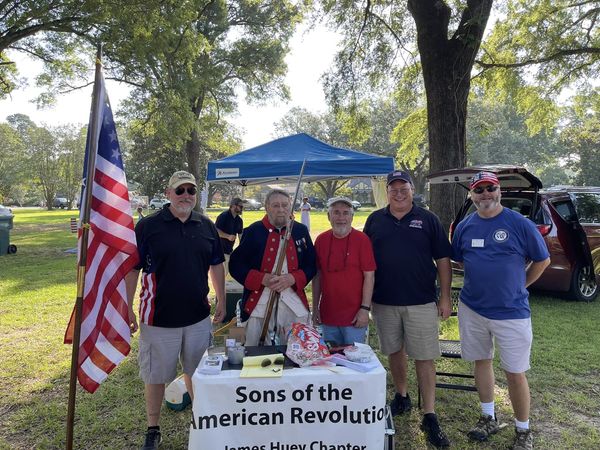
Compatriot Gerald Graves of the James Huey Color Guard attended the Chennault Fest 2024 at 701 Kansas Lane in Monroe, Louisiana dressed in his Revolutionary War uniform. Compatriot Graves greeted the visitors as they entered the event and informed them about the Sons of the American Revolution. The festival featured hot air balloons, arts and crafts and live music.
-
Chapter member informs DAR Chapter about Cast Iron Cookware use in the War (October 1, 2024)
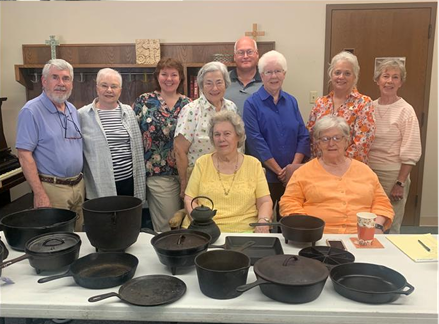
Compatriot Steve Ray informed the ladies of the Long Leaf Pine Chapter of the DAR in Ruston Louisiana about the history of cast iron cookware and how it was even used in the Revolutionary War. Compatriot Ray covered the origins of cast iron cookware beginning in China up to the many different manufacturers that were even from the South such as the Hardwick Stove Company & Lodge Cast Iron, both of Tennessee and Birmingham Stove & Range & Martin Stove & Range who were both of Alabama.
-
Chapter learns about the Period Uniform and items used during the Revolution (September 24, 2024)
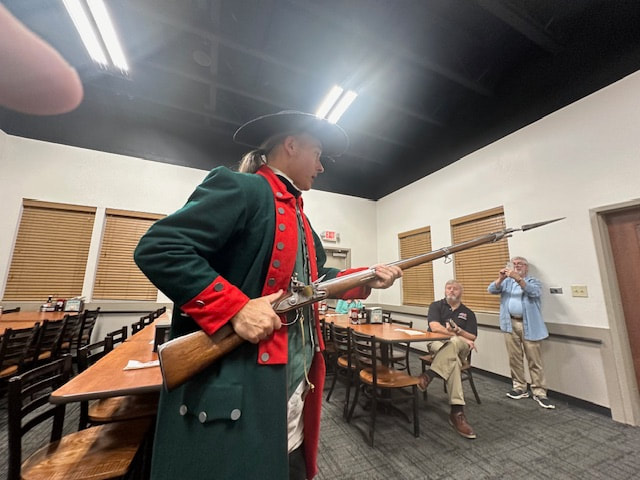
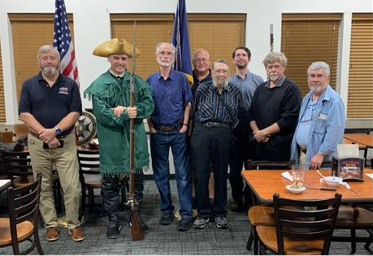
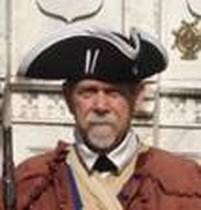
During our September meeting, Kevin Adkins, Revolutionary War re-enactor and high school history teacher at Union High School in Farmerville, LA spoke on the various items that Revolutionary War soldiers used during the war. Each patriot carried a bed roll, cartridge holder, rifle with bayonet, knife, stockings, glasses, canteen, leather cup, moccasins, and various clothing that he uses during re-enactments. Mr. Adkins portrays a West Florida Ranger who were Loyalist and also a Florida Militiaman.
From the pages of THE MISSISSIPPI VALLEY HISTORICAL REVIEW Vol. II, No. 4 March 1916THE LOYALISTS IN WEST FLOEIDA AND THE NATCHEZ DISTRICT
During the period 1764 to 1781, West Florida was a British province, and embraced a large part of the present states of Alabama and Mississippi, extending somewhat northward of the site of Montgomery, Alabama. Captain George Johnstone arrived at Pensacola as the first governor under the new regime in February, 1764, accompanied by a British regiment and many highlanders from Charleston and New York. He at once organized the civil government, and garrisoned Fort Charlotte at Mobile, Fort Bute at Manchac, and Fort Panmure at Natchez.
The English authorities encouraged immigration, and numerous settlers came in before the revolution from the Carolinas and Georgia, from Great Britain and the British West Indies, from New Jersey, Delaware, and Virginia, and even from the New England colonies. These settlers formed communities between Manchac and Baton Rouge, in the Natchez country and in the region drained by the bayou Sara, the Homochitto, and the bayou Pierre.
Group photo L-R: Wynn Lawrence, Kevin Adkins, Robert Hendrick, Steve Ray, Gerald Graves, Stephen Hendrick, Ted Brode & Fred Hamilto
-
Chapter learns about the Battle of Cowan’s Ford (August 27,2024)
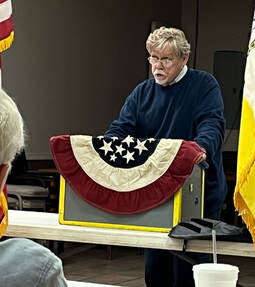
During our August Chapter meeting, Chapter President Ted Brode speak about the Battle of Cowan's Ford. It was fought on February 1, 1781, at Cowan's Ford on the Catawba River in northwestern Mecklenburg County, NC between a force of about 2,400 British and 800 Patriot militia.
On January 31, Cornwallis began to move his army despite the heavy rain fearing any further delay would cause him to lose his chance of destroying Greene's army. Some six weeks after the engagement, Cornwallis wrote that he had ordered a detachment under Lieutenant Colonel Webster to "make every possible demonstration by cannonading and otherwise, of an intention to force a passage" at Beatties Ford while he would march down the river to Cowan's Ford.
General Greene arrived and ordered General Davidson, who had placed his men at the various fords along the eastern bank, to slow the British Army's crossing of the Catawba River. Greene and Morgan then left to accompany the bulk of their forces towards Salisbury, NC.
Davidson dispatched a company of cavalry and infantry southward four miles to Cowan's Ford. The cavalry was to see that the British did not make a surprise crossing under cover of darkness. Toward nightfall Davidson joined the detachment at Cowan's Ford. Davidson evidently feared that Tarleton's troops might slip across the river in the darkness and, getting behind him, they could attack him as the British infantry began its crossing. He therefore set up camp a half mile from the river, with pickets watching Cowan's Ford from the water's edge.
Near daybreak, after a difficult march in which the British lost some of their cannon, Cornwallis's army reached Cowan's Ford. Cowan's Ford was actually two fords; one, the horse ford, though shallower than the other, was longer, because it crossed the stream at an angle; the other, called the wagon ford, went straight across the river but was much deeper. With very little hesitation, the British began crossing the swollen stream straight across along the wagon ford. Soon the horses were over their heads in the raging torrent.
Davidson's forces immediately began to confront the Redcoats. The militiamen were picking off many British soldiers as they struggled in the water to reach the far bank. After the first elements reached the bank and formed a firing line, they began to fire a volley at the now retreating militia. Shortly after arriving on the scene, Davidson was struck from his horse by a rifle ball through the heart. Oral tradition has it that a local Tory guide fired the fatal shot.
Late that evening Davidson's body was found, stripped and rain drenched. General Davidson is buried at Hopewell Presbyterian Church in Mecklenburg county, NC.
-
Chapter Members support Triangle Park 4th of July Parade in Monroe (July 4, 2024)
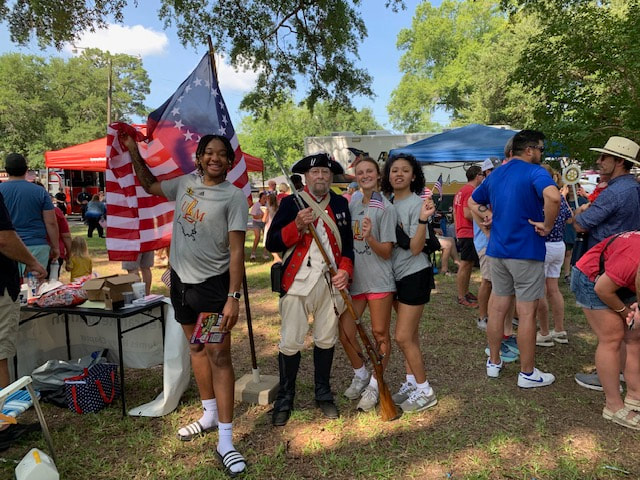
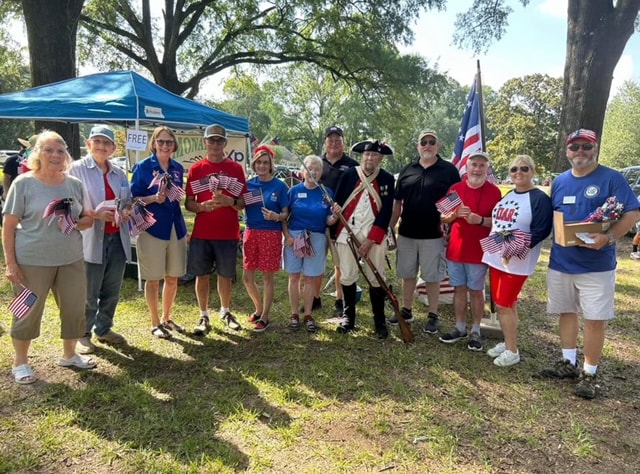
Members of Benjamin Tennille Chapter LASSAR of Monroe, along with James Huey Chapter LASSAR of West Monroe, Chief Tusquahoma Chapter LSDAR of West Monroe and Fort Miro Chapter LSDAR of Monroe handed out candy and more than 350 American flags to the children and parents attending the celebration & parade. Even with very hot weather approaching 100 degrees, Compatriot Gerald Graves attended the whole event wearing a period Revolutionary War Uniform and gear demonstrating to the attendees what our soldiers used during our fight for American Independence. One of the founders of the Triangle Park Parade was Fred Huenefeld who was a long-time member of the Benjamin Tennille Chapter of Monroe.
-
Chapter Learns About Tarring and Feathering (June 25, 2024)
During our June meeting Chapter President Ted Brode presented "Tarred and Feathering; a History of the Practice". Tarring and Feathering is a form of public torture where a victim is stripped naked, or stripped to the waist, while wood tar (sometimes hot) is either poured or painted onto the person. The victim then either has feathers thrown on them or is rolled around on a pile of feathers so that they stick to the tar.
Used to enforce unofficial justice or revenge, it was used in medieval Europe and its colonies in the early modern period, as well as the early American frontier, mostly as a form of vigilante justice. The image of a tarred-and-feathered outlaw remains a metaphor for severe public criticism.Tarring and feathering was a very common punishment in British colonies in North America during 1766 through 1776. The most famous American tarring and feathering is that of John Malcolm, a British loyalist, during the American Revolution.
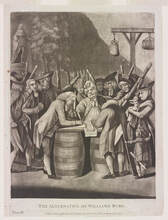
The attached photo was printed for R. Sayer & J. Bennett on Feb. 16, 1775. "Virginian loyalist" being forced to sign a document, possibly issued by the Williamsburg Convention, by a club-wielding mob of "liberty men". On the left, a man is being led towards a gallows standing in the background on the right and from which hangs a sack of feathers and a barrel of tar.
-
Chapter learns about the Battle of Bunker Hill, & Welcomes Newest Member (May 28, 2024)
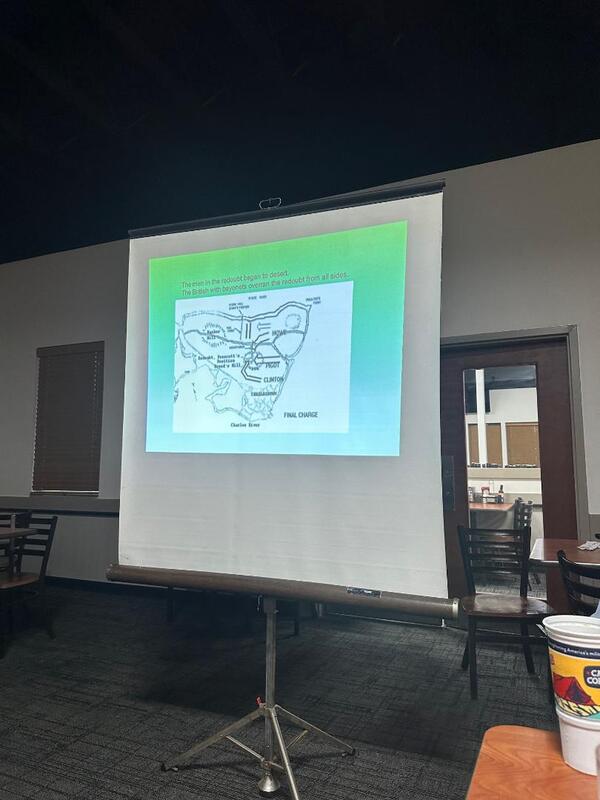
The Battle of Bunker Hill was fought on June 17, 1775, during the Siege of Boston in the first stage of the American Revolutionary War.[5] The battle is named after Bunker Hill in Charlestown, Massachusetts, which was peripherally involved. It was the original objective of both the colonial and British troops, though the majority of combat took place on the adjacent hill which became known as Breed's Hill.
The battle was a tactical victory for the British,[11][12] but it proved to be a sobering experience for them; they incurred many more casualties than the Americans had sustained, including many officers. The battle had demonstrated that inexperienced militia were able to stand up to regular army troops in battle. Subsequently, the battle discouraged the British from any further frontal attacks against well defended front lines. American casualties were much fewer, although their losses included General Joseph Warren and Major Andrew McClary, the final casualty of the battle.
This was a Pyrrhic Victory for the British as they had suffered too great a loss for what was achieved.
During our meeting, Ted Brode also presented our newest member, John Lee, his membership certificate. Compatriot Lee who joined under his patriot ancestor, James Brown, a Private in the 1st Regiment of the North Carolina Militia under Captain Dixon where he received payment for militia service in Salsbury District, North Carolina and also served as a guide for Colonel Lee and Colonel Washington.
-
Chapter Learns about the Battle of St. Louis, Unveils Guidon & Welcomes New Member (April 23, 2024)
The Battle of St. Louis, also known as the Attack on St. Louis and the Battle of Fort San Carlos, was fought on May 26, 1780, between British-allied Indians and defenders of the Franco-Spanish village of St. Louis, Louisiana (present-day U.S. state of Missouri) during the American Revolutionary War. The garrison, a motley assortment of regulars and militiamen led by Upper Louisiana's lieutenant governor, Captain Fernando de Leyba, suffered a small number of casualties.
De Leyba fortified St. Louis as best as he could and successfully withstood the British invasion. On the opposite bank of the Mississippi River, a simultaneous attack on the nearby American village of Cahokia was also repulsed. The retreating British-allied Indians destroyed crops and took captive inhabitants outside the protected area. The British failed to defend their side of the river and, thus, effectively ended any attempts to gain control of the Mississippi River during the Revolutionary War.
On May 25, Hesse sent out scouting parties to determine the situation at St. Louis. These parties were unable to get close to the village due to the presence of workers (including women and children) in the fields outside the village. The next day, Hesse sent Jean-Marie Ducharme and 300 Indians across the river to attack Cahokia, while the remainder arrived around 1:00 pm near St. Louis. A warning shot was fired from the tower when they came into view. The Sioux and Winnebagoes led the way, followed by the Sauk, Meskwaki and fur traders, including Hesse, in the rear. Leyba directed the defense from the tower and opened fire on the approaching enemy from the trenches and tower when they came in range. On the first volley, most of the Sauk and Meskwaki fell back, apparently unwilling to fight, leaving many of the other participants suspicious of their motives in joining the expedition and complaining of their "treachery."
Wapasha and the Sioux persisted for several hours in attempts to draw the Spanish defenders out. They went as far as brutally killing some captives they had taken in the fields. Although this angered some of the townspeople, Lebya refused to grant permission to the militia to make a sortie. The attackers eventually withdrew and headed north, destroying crops, livestock, and buildings as they went. On the other side of the river, Ducharme's attack on Cahokia was easily repulsed. George Rogers Clark made a timely arrival to lead Cahokia's defense. Clark's reputation as a frontier fighter made the Indian force reluctant to pursue the attack.
The village of 700 inhabitants lost between 50 and 100 people who were either killed, wounded or captured. Virtually all casualties were civilians. A year later, the Spaniards from St. Louis raided Fort St. Joseph and brought the captured British flag back to St. Louis. Leyba died the following month. He was the subject of local criticism because he never formally recognized the efforts made by the citizenry in the town's defense. King Charles III, unaware that he had died, promoted him to the rank of lieutenant colonel because of his valor in action.
The site where Fort San Carlos stood is at the corner of Fourth and Walnut Street in St. Louis. A local organization, the Commemoration Committee for the Battle of Fort San Carlos, annually commemorates the event by reading out the names of the 21 people who lost their lives during the battle.
During our meeting, our Chapter also unveiled the Chapter Guidon and new pole and presented our newest member, Compatriot Wynn Lawrence who joined under his patriot ancestor, Daniel Lawrence, of New York who was a Lieutenant in Captain John F Hamtramek's Company in the 5th NY Regiment under the command of Colonel Lewis Dubois. Lt. Lawrence was captured in 1777.
-
Chapter Present Chapter Contest Winners with Certificate and Prize and recognize contests (April 4, 2024)
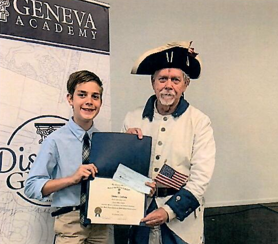
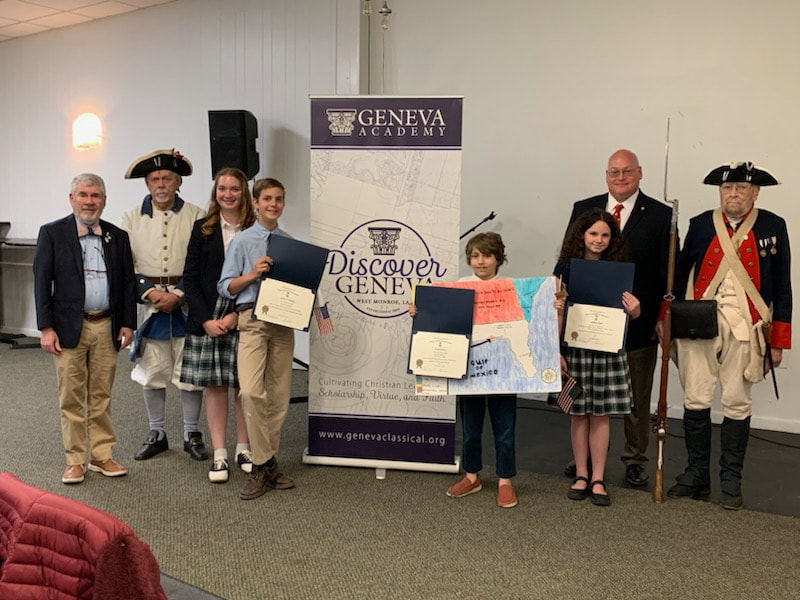
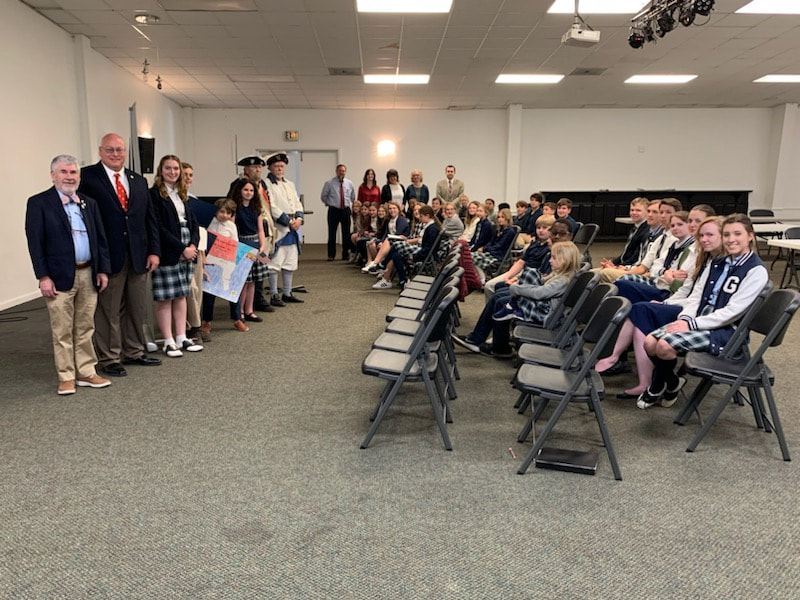
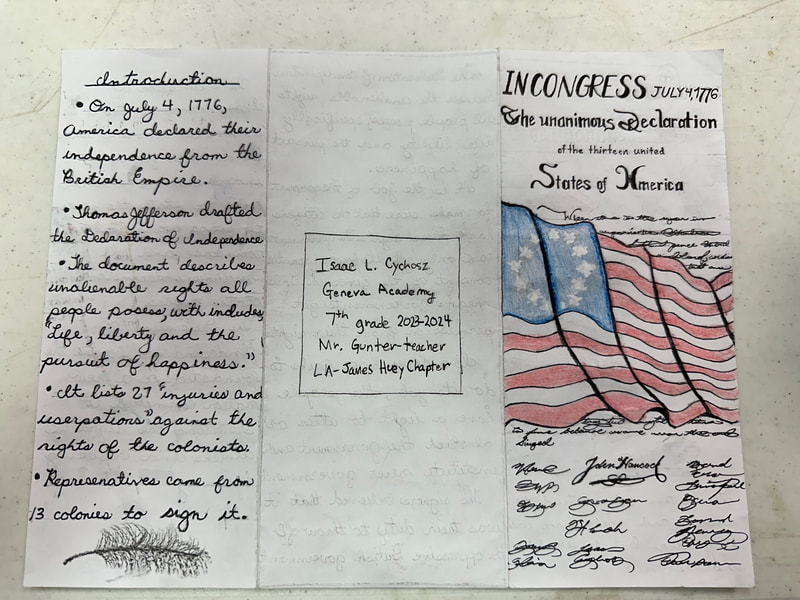
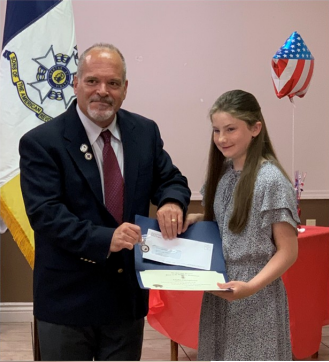
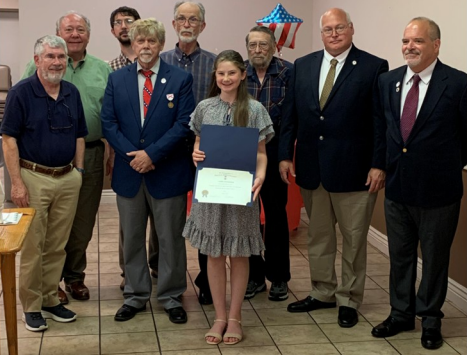
James Huey Chapter Members presented the winner of the Sgt. Moses Adams Memorial Middle School Brochure Contest to Isaac L. Cychosz of the Geneva Academy of West Monroe. Mr. Cychosz received a certificate and a check for $60 from Chapter President Ted Brode. During our visit, President Brode thanked all of the students who participated and well as recognized Ms. Gloria Cychosz in front of her school for winning the George S. and Stella M. Knight Essay Contest, Mr. Erick Huber for his Americanism Elementary Poster Contest entry and Ms. Sophie Nash for her recital of Patrick Henry's "Give me liberty or give me death" during our March meeting.
Pictured l-r: Isaac Cychosz and Chapter President Ted Brode
Pictured l-r: Youth Awards Chairman Fred Hamilton, Chapter President Ted Brode, Gloria Cychosz, Isaac Cychosz, Erick Huber, Sophie Nash, Secretary/Treasurer Steve Ray, Gerald Graves.
-
Chapter hears Patrick Henry’s speech & Learns about Molly Pitcher & Margaret Corbin (March 26, 2024)
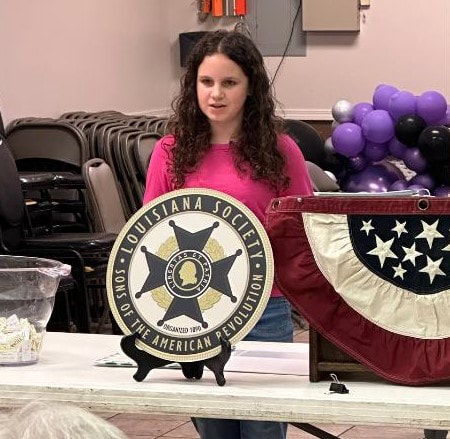
During its March meeting, Chapter members heard the presentation of Patrick Henry's speech "Give me liberty or give me death" given by Sophie Nash who is in the 5th grade at the Geneva Academy of West Monroe. After the presentation, Ms. Nash drew the name of Wynn Lawrence, who was lucky ticket holder for the $2 bill printed in 1777 by the newly formed United States of America. Ticket holders had donated to help James Huey Chapter raise a total of $525 to help with the costs of the Louisiana Society host the 2027 SAR National Congress being held in New Orleans.
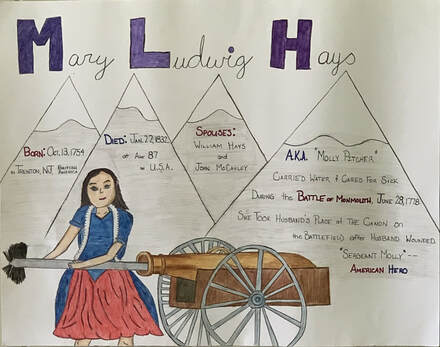
Chapter members also heard Ted Brode present Molly Pitcher is a nickname given to a woman who fought in the Revolutionary War. She is most often identified as Mary Ludwig Hays, who fought in the Battle of Monmouth in June 1778. Another possibility is Margaret Corbin, who helped defend Fort Washington in New York in November 1776.
The deeds in the story of Molly Pitcher are generally attributed to Mary Ludwig Hays, who was married to William Hays, an artilleryman in the Continental Army. She joined him at the Army's winter camp at Valley Forge in 1777, and was present at the Battle of Monmouth, where she served as a water-carrier. Her husband fell and she took his place swabbing and loading the cannon, and was later commended by George Washington.
The story of Margaret Corbin bears similarities to the story of Mary Hays. Margaret Corbin was the wife of John Corbin of Philadelphia, Pennsylvania, also an artilleryman in the Continental Army.
On November 16, 1776, John Corbin was one of 2,800 American soldiers who defended Fort Washington in northern Manhattan from 9,000 attacking Hessian troops under British command. Corbin was killed and Margaret took his place at the cannon. She continued to fire it until she was seriously wounded in the arm. In 1779, Margaret Corbin was awarded an annual pension of $50 by the state of Pennsylvania for her heroism in battle. She was the first woman in the United States to receive a military pension. Her nickname was "Captain Molly".
-
Chapter members present awards and prizes to Poster Contest Winners (March 4, 2024)
James Huey Chapter Members presented the winners of the Americanism Elementary Poster Contest from the Cedar Creek Elementary School in Ruston, Louisiana their certificates and prizes. During our visit, Chapter President Ted Brode thanked all the 5th Grade Class that participated in the contest and thanked their teacher Ms. Barron for her work.
Pictured l-r: Secretary Treasurer Steve Ray, 1st Place Winner Charlie Williams
, Poster Chairman Fred Hamilton, 2nd Place Winner Eli Singleton, Chapter President Ted Brode, 3rd Place Winner Genesis Jones and 5th Grade Teach Nicole Barron.
-
Chapter Members Work Booth for 2027 National Congress and Recruit New Members (March 2, 2024)
Compatriots Steve Ray and Gerald Graves set up shop at Pecanland Mall in Monroe and took donations to help raise funds for the Louisiana Society to host the SAR 2027 National Congress to be held in New Orleans. Donors received chances to win a two-dollar bill printed in 1777 by the newly formed United States of America with the drawing to be held during the Chapter’s March meeting. A total of $72 was raised that day and donors had an opportunity to have their photograph taken with Gerald in his Revolutionary War uniform. Several people expressed interest in SAR.
-
Chapter Judges Elementary School Poster Contest & Middle School Brochure Contest (February 27, 2024)
During its February meeting, James Huey Chapter members chose the winners of the entries in both the Americanism Elementary School Poster Contest & Moses Adams Memorial Middle School Brochure Contest.
The National Society of the Sons of the American Revolution (SAR) invites all 3rd, 4th, and 5th grade students interested in the American Revolution to participate in the Americanism Elementary School Poster Contest. The contest is open to public school, parochial, home schooled, Scouting, or Children of the American Revolution member students in that same grade range. Young artists with an enthusiasm toward art, a love of American history, or a passion in creative expression can submit their posters to their local SAR chapter for competition. While the Americanism Poster Contest begins at the local level, students' masterpieces may eventually be judged and monetarily awarded at the national level in June at the annual SAR Congress.
Participants from other organizations must be of equivalent age for 3rd, 4th, or 5th grades, whichever year that American History is taught in the specific school district. If American History is taught in lower grades at selected schools, an entry may be accepted for the competition at the discretion of the SAR Americanism Committee. All entries will be judged on an equal basis regardless of point of origin. A complete set of rules, along with the application for both the applicant and the sponsoring SAR members, can be found below. Please be aware that the local application deadline dates may vary, so interested applicants should reach out to their local SAR chapter for further details. The theme for the Poster Contest rotates annually based upon whether the school year ends in an even or odd number.
This year’s theme was "Revolutionary War Event." The James Huey Chapter contestants were chosen from the entries of the Cedar Creek Elementary School in Ruston. 1st place went to Charlie Williams. 2nd place went to Eli Singleton, and 3rd Place went to Genesis Jones.
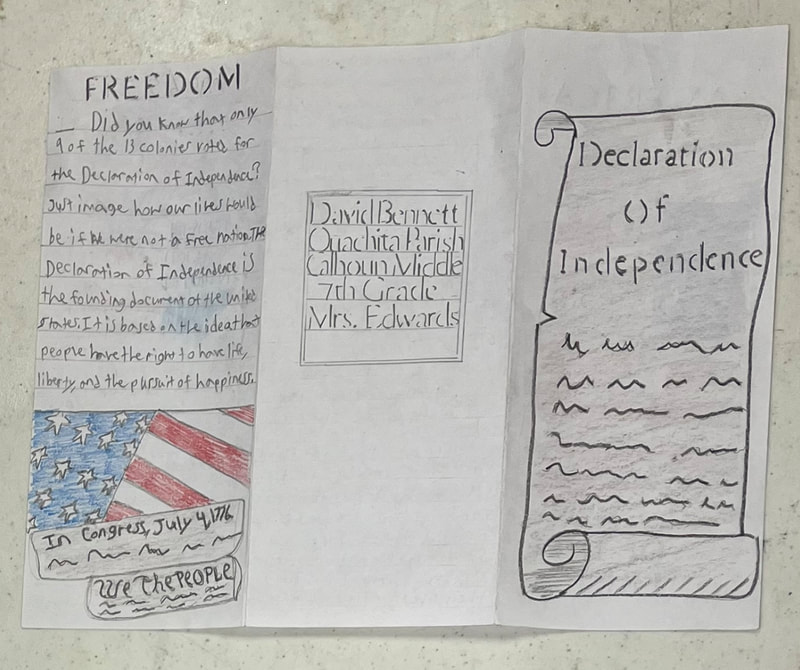
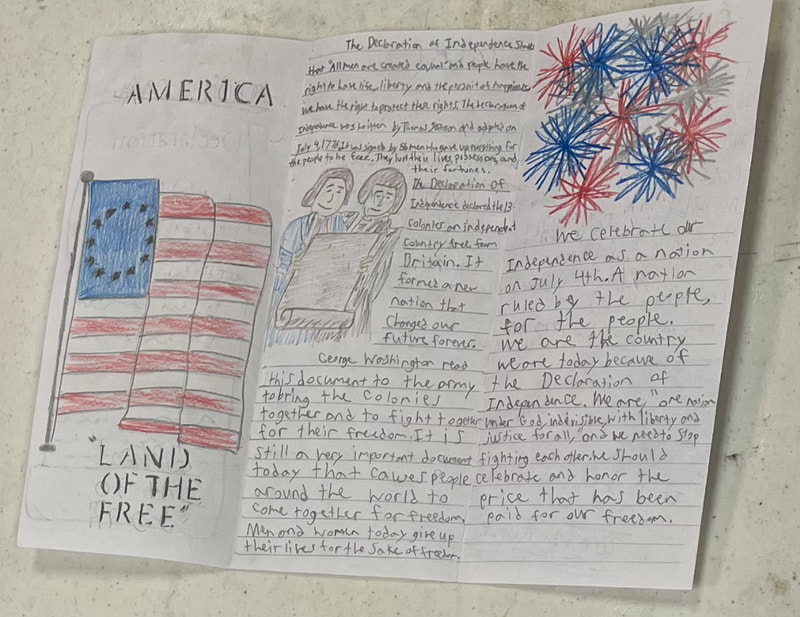
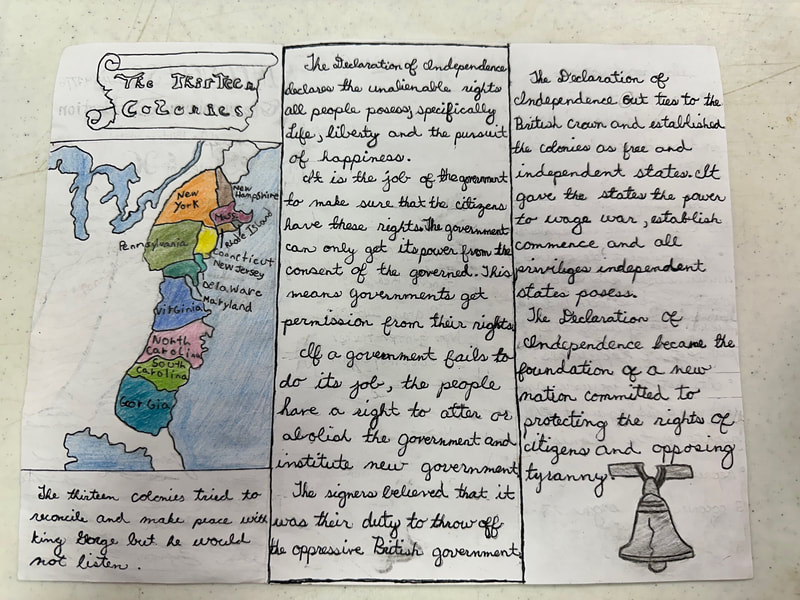
The SAR Moses Adams Memorial Middle School Brochure Contest is to create a tri-fold brochure out of a typical 8 ½” x 11″ piece of paper. The brochure must conform to the contest theme which is one the five foundational documents of the United States – which you select. The brochure will be judged on: Content, Creativity and Correctness. The judging criteria rates highest personally drawn artwork and text authored by the student as opposed to cut and paste from books, magazines and the Internet. The use of software tools by the student for creating the brochure, and even the artwork, is permissible.
The SAR Brochure Contest is open to all 6th, 7thand 8th grade Middle School students in public, private and home schools. When school systems are participating in the contest, students will enter through their school system. If they are not participating, students may enter directly to the chapter, through scouting or the CAR (Children of the American Revolution). Regardless of how the student enters, he/she may only enter one brochure per year. All brochures will be created by the individual student, no group entries are allowed. The contest is designed to help support the educational efforts in public, private and home school curriculums when the Revolutionary period is taught, but students may enter in any of their middle school years.
-
Chapter hears Essay Contest Winner, Unveils Guidon & Learns about Brown Bess (February 1, 2024)
The James Huey Chapter awarded their Chapter's Knight Essay Contest Winner to Miss Gloria Cychosz for her essay “The Definitive Patriot”. Miss Cychosz, a student of the Geneva Academy in West Monroe read her winning essay to the membership and was presented a certificate and $100 prize money for her winning entry by Chapter President Ted Brode.
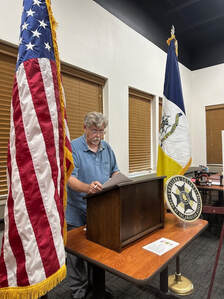
Chapter President Ted Brode presented the Chapter’s new guidon which incorporates South Carolina elements into the flags design as James Huey served in the South Carolina Militia.During the same meeting, Chapter President Ted Brode informed the group about the Brown Bess Musket.
-
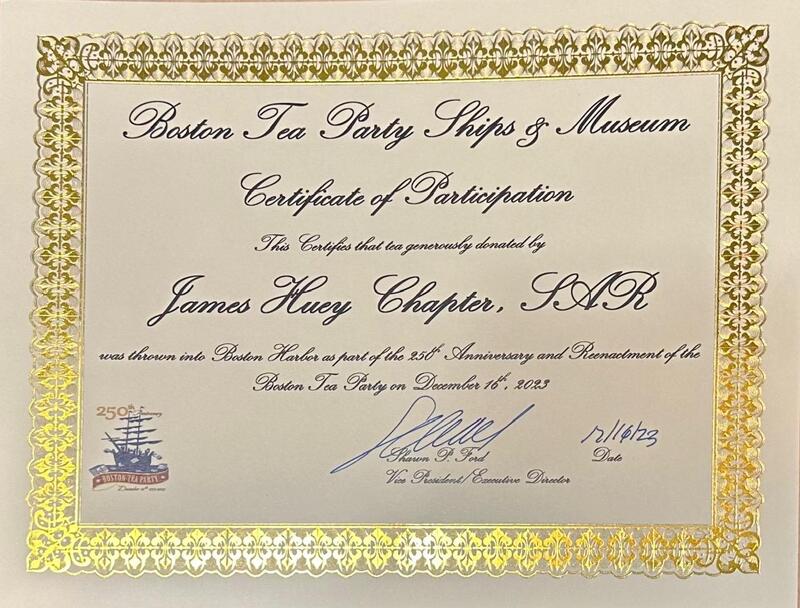
Chapter supports the Celebrate of the 250th Anniversary of the Boston Tea Party (December 16, 2023)
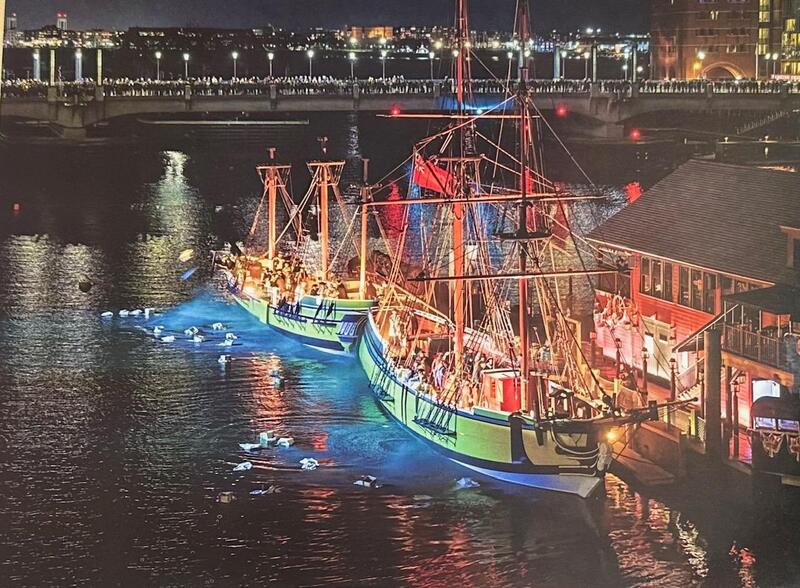
James Huey Chapter members supports Boston Tea Party Ship & Museum by sending tea to be used in the Celebrate the 250th Anniversary of the Boston Tea Party on December 16th 2023. The Chapter was able to mail loose tea that was dumped into Boston Harbor on the night of the event and received a certificate of appreciation for their support and a photo of the event.
The Boston Tea Party was an American political and mercantile protest on December 16, 1773, by the Sons of Liberty in Boston in colonial Massachusetts.[2] The target was the Tea Act of May 10, 1773, which allowed the British East India Company to sell tea from China in American colonies without paying taxes apart from those imposed by the Townshend Acts. The Sons of Liberty strongly opposed the taxes in the Townshend Act as a violation of their rights. In response, the Sons of Liberty, some disguised as Native Americans, destroyed an entire shipment of tea sent by the East India Company.
-
Members Deliver Items to the Northeast Louisiana Veterans Home in Monroe LA (December 4, 2023)
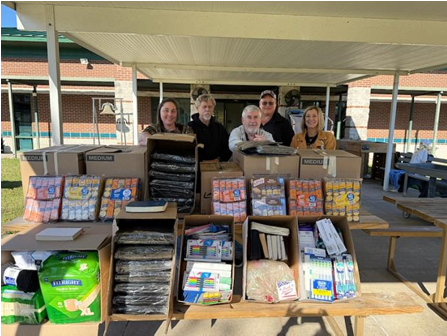
Chapter members delivered the more than 886 items collected for the veterans of Northeast Louisiana Veterans Home and presented them to Rebecca Cates who is the NELA VA Activities Director. The Northeast Louisiana Veterans Home can house 156 veterans and is presently the home for 130 veterans who served in World War II, the Korean War, Vietnam Conflict, and Desert Storm,
Pictured L-R: Fred Hamilton, Ted Brode, Chapter President, Rebecca Cates, Director of the VA home, and Steve Ray Sec/Treasurer.
-
James Huey Chapter Serves Veterans (November 18, 2023)
During the Thanksgiving Party at the home of Ted and Phyllis Brode, the members of the James Huey Chapter looked over 850 items that were collected for the NELA Veterans Home in Monroe by Chapter members to be delivered in time for Christmas. L-R: Chapter President Ted Brode, Chris LeGuin, Sec/Treasurer Steve Ray, Gerald Graves and Fred Hamilton.
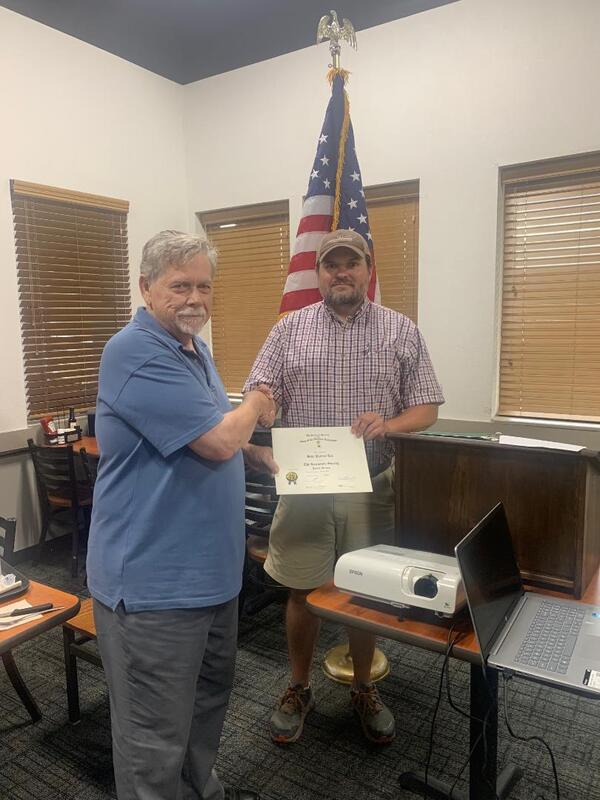
Also during the meeting, Ted Brode presented membership certificates to our newest members;
Christopher Michael LeGuin and his son Christopher Scott LeGuin. Christopher Michael LeGuin accepted both his and his son Christopher Scott LeGuin's certificates. The LeGuin family are descendants of Patriot John Pennock who was born 17 Jun 1715 in New Keat Virginia and died Sep 1787 in Prince Edward County Virginia who provided Patriotic Service while living in Prince Edward County during the War for American Independence. John Pennock was married to Mary Mallory and had three children, Thomas, Nathan and John.
-
Chapter Learns About “The Battle of Quebec” (October 24, 2023)
During our October meeting, Chapter President Ted Brode informed the membership about the "The Battle of Quebec".
Benedict Arnold, who had been rejected for leadership of the Champlain Valley expedition, returned to Cambridge, Massachusetts, and approached George Washington with the idea of a supporting eastern invasion force aimed at Quebec City. Washington approved the idea, and gave Arnold 1,100 men, including Daniel Morgan's riflemen, for the effort. Arnold's force sailed from Newburyport, Massachusetts to the mouth of the Kennebec River and then upriver to Fort Western (present day Augusta, Maine).
-
Chapter Learns About “The Canadian Campaign” (September 26, 2023)
During our September meeting, our Chapter voted on the final choice of design for the Chapter's guidon and Chapter President Ted Brode informed the membership about the "The Canadian Campaign".
The primary thrust of the invasion was to be led by General Schuyler, going up Lake Champlain to assault Montreal and then Quebec City. The expedition was to be composed of forces from New York, Connecticut, and New Hampshire, as well as the Green Mountain Boys under Seth Warner, with provisions supplied by New York.However, Schuyler was overcautious, and by mid-August the colonists were receiving reports that General Carleton was fortifying defensive positions outside Montreal, and that some Native tribes had joined with the British.
-
Chapter Learns About Flag Design and Designs Chapter Guidon (August 29, 2023)
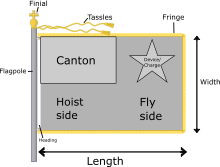
During our August meeting, Chapter President Ted Brode informed the membership about the flags and flag design. A flag is a piece of fabric (most often rectangular or quadrilateral) with a distinctive design and colors. It is used as a symbol, a signaling device, or for decoration. The term flag is also used to refer to the graphic design employed, and flags have evolved into a general tool for rudimentary signaling and identification, especially in environments where communication is challenging.
The general parts of a flag are: canton (the upper inner section of the flag), field or ground (the entire flag except the canton), the hoist (the edge used to attach the flag to the hoist), and the fly (the furthest edge from the hoist end).
-
Chapter Learns About the Different Capitals Used by Our Government (June 25, 2023)
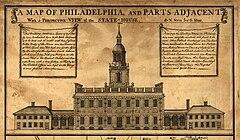
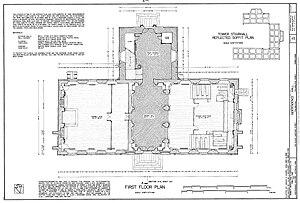
During our June meeting, Chapter President Ted Brode informed the different Capitols used by our government during the Revolution. On July 16, 1790, George Washington signed the Residence Act of 1790. This Act decreed that the National Capital, and permanent seat of government, would be established along the Potomac River on land gifted by Maryland and Virginia. In addition, Philadelphia, Pennsylvania, would become the temporary capital until 1800, the deadline for the permanent capital to be completed, which would be named Washington, D.C
On April 30, 1789, George Washington took oath of Office as the First President of the United States at Federal Hall in New York City. Federal Hall was demolished in 1812, but the Nation that George Washington preceded over still lives on. Since 1800, Washington, D.C. is the permanent seat of the United States Government.
-
Chapter Awards Winner of the Americanism Elementary School Poster Contest (May 23, 2023)
Louisiana State Society President Randall Domingue visited our James Huey Chapter and presented the State Americanism Elementary School Poster Contest winner, Layla Jeansonne of the Cedar Creek Elementary School in Ruston her award LASSAR and a check for $100. President Domingue discussed about events during the Annual meeting as well as upcoming events.
Layla Jeansonne poster was taken to SAR Congress where her entry will represent Louisiana and competed on the National Level of the Americanism Elementary School Poster Contest in Orlando, Florida.
L-R: Fred Hamilton, King Scott, Stephen Hendrick, Ted Brode, Robert Hendrick, Layla Jeansonne, Gerald Graves, Steve Ray, and Randall Domingue
-
Chapter Awards State Contest Winner and Presents Certificates of Appreciation (May 19, 2023)
Members of the James Huey Chapter attended commencement ceremonies at the Calhoun Middle School where they presented the Louisiana State Society winner of the Sgt. Moses Adams Middle School Brochure Contest, David Bennett, his award and check for $100.
During our previous visit to the Calhoun Middle School when the awards for the winners of our Chapter Contest were presented. Rick Hearn, the Principal of the School, pointed out to the members of the Chapter that David Bennett was not only a good student, but was also a very patriotic young man and that he and his friend Gabe Bond spent each day to properly display and care for the school’s flag.Principal Hearn stated that the young men put thought and care into properly handling and folding the flag each day. Upon hearing of this, the James Huey Chapter decided to award both David Bennett and Gabe Bond with certificates for their exemplary Patriotism in the display of the flag of the United States of America at the Calhoun Middle School.
L-R: Gabe Bond, Mrs. Brenda Edwards, Calhoun Middle School 7th Grade Social Studies teacher, David Bennett, Fred Hamilton, Steve Ray, and James Huey Chapter President Ted Brode.
-
Chapter Members Man Booth at Red, White & Blue Air Show (May 5, 6 & 7, 2023)
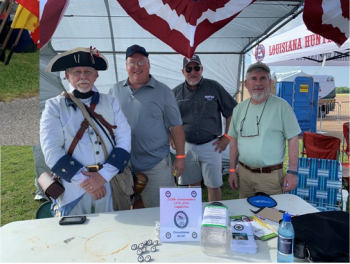
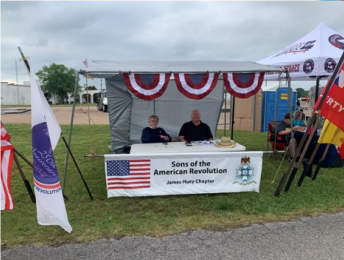
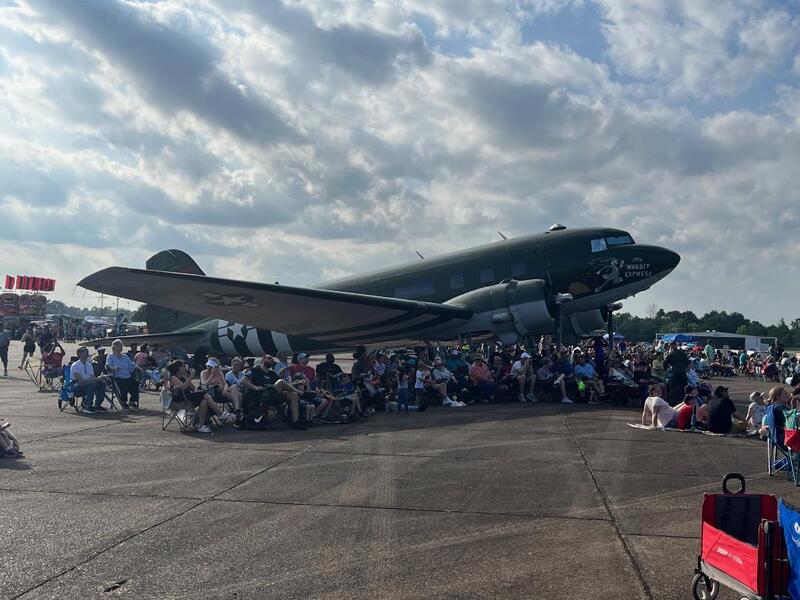
The James Huey Chapter supported the Red, White, & Blue Air Show at the Monroe, LA Airport. The Red, White, & Blue Air Show at the Monroe Airport has been a yearly event that is sponsored by the Chennault Aviation and Military Museum who graciously allows organizations like SAR to have booths to educate visitors about patriotism and history of our great Country.
Our members gave out LASSAR brochures, educational contest that our society supports and promoted our upcoming celebration of our 250th Anniversary of the founding of our Country! Attendees who donated $5 or more were presented with one of our SAR 250th Anniversary pins.
-
Chapter Learns About Franklin’s idea for Long Bow as Weapon (April 25, 2023)
During our April meeting, Chapter President Ted Brode informed the membership about Benjamin Franklin’s ideas for the use of Long Bows as a weapon during the American Revolution. The last known record of the use of the longbow in action was as late as WWII, when Englishman “Mad” Jack Churchill was credited with a shot from his longbow that killed a German solider in France in 1940. There was serious consideration for using this weapon during the American Revolution and the idea was put forth by Benjamin Franklin.Franklin believed he had found at least a partial solution to the problem for the lack of muskets for the military. He wrote to Lieutenant General Charles Lee in February 1776, “that pikes could be introduced, and I would add bows and arrows; these were good weapons not wisely laid aside.” In this remarkable letter Franklin listed the attributes of bows and arrows: "Because a Man may shoot as truly with a Bow as with a Common Musket.”
However, Franklin’s idea was not adopted due to the practicality and that it took years of practice for men to achieve readiness to be archers.
-
Chapter learns about “Provisioning the Army during the American Revolution” (March 28, 2023)
The Continental Army was the army of the United Colonies representing the Thirteen Colonies and later the United States during the American Revolutionary War. It was formed on June 14, 1775 by a resolution passed by the Second Continental Congress, meeting in Philadelphia after the war's outbreak.
The Continental Army was created to coordinate military efforts of the colonies in the war against the British, who sought to maintain control over the American colonies. General George Washington was appointed commander-in-chief of the Continental Army and maintained this position throughout the war.The Continental Army was supplemented by local militias and volunteer troops that were either loyal to individual states or otherwise independent. Most of the Continental Army was disbanded in 1783 after the Treaty of Paris formally ended the war. The Continental Army's 1st and 2nd Regiments went on to form what was to become the Legion of the United States in 1792, which ultimately served as the foundation for the creation of the U.S. Army.
Each state provided pay, food, shelter, clothing, arms, and other equipment for each of their state regiments. Each state also had a quota, based on their population size, for the number of soldiers they were required to raise. George Washington was able to make an Army from whole cloth and defeat the British Army to win America our Independence was truly amazing
-
Chapter Judges Elementary School Poster Contest & Middle School Brochure Contest (February 28, 2023)
James Huey Chapter chose the winners of the entries in both the Americanism Elementary School Poster Contest & Moses Adams Memorial Middle School Brochure Contest. The National Society of the Sons of the American Revolution (SAR) invites all 3rd, 4th, and 5th grade students interested in the American Revolution to participate in the Americanism Elementary School Poster Contest. The contest is open to public school, parochial, home schooled, Scouting, or Children of the American Revolution member students in that same grade range. Young artists with an enthusiasm toward art, a love ofAmerican history, or a passion in creative expression can submit their posters to their local SAR chapter for competition. While the Americanism Poster Contest begins at the local level, students' masterpieces may eventually be judged and monetarily awarded at the national level in June at the annual SAR Congress.
Participants from other organizations must be of equivalent age for 3rd, 4th, or 5th grades, whichever year that American History is taught in the specific school district. If American History is taught in lower grades at selected schools, an entry may be accepted for the competition at the discretion of the SAR Americanism Committee. All entries will be judged on an equal basis regardless of point of origin.
A complete set of rules, along with the application for both the applicant and the sponsoring SAR members, can be found below. Please be aware that the local application deadline dates may vary, so interested applicants should reach out to their local SAR chapter for further details. The theme for the Poster Contest rotates annually based upon whether the school year ends in an even or odd number.
This year’s theme was "Revolutionary War Person or Persons." The James Huey Chapter contestants were from Cedar Creek Elementary School. Second place went to Emma Doss, while First place went to Layla Jeansonne.The SAR Moses Adams Memorial Middle School Brochure Contest is to create a tri-fold brochure out of a typical 8 ½” x 11″ piece of paper. The brochure must conform to the contest theme which is one the five foundational documents of the United States – which you select. The brochure will be judged on: Content, Creativity and Correctness. The judging criteria rates highest personally drawn artwork and text authored by the student as opposed to cut and paste from books, magazines and the Internet. The use of software tools by the student for creating the brochure, and even the artwork, is permissible.
The SAR Brochure Contest is open to all 6th, 7thand 8th grade Middle School students in public, private and home schools. When school systems are participating in the contest, students will enter through their school system. If they are not participating, students may enter directly to the chapter, through scouting or the CAR (Children of the American Revolution). Regardless of how the student enters, he/she may only enter one brochure per year. All brochures will be created by the individual student, no group entries are allowed. The contest is designed to help support the educational efforts in public, private and home school curriculums when the Revolutionary period is taught, but students may enter in any of their middle school years.
The SAR Brochure Contest theme is the same every year – it does not change from year to year. Choose from any of the six (6) Foundational Documents of the United States as the theme for your brochure:
-Articles of Confederation
-Declaration of Independence
-U.S. Constitution
-Bill of Rights
-Federalist Papers
-Articles of Association of 1774
42 brochures were received from the Calhoun Middle School for judging. First Place was David Bennett; Second Place was Andi Norris; Third Place was Taylor Vanderpoel