
The Battle of St. Louis, also known as the Attack on St. Louis and the Battle of Fort San Carlos, was fought on May 26, 1780, between British-allied Indians and defenders of the Franco-Spanish village of St. Louis, Louisiana (present-day U.S. state of Missouri) during the American Revolutionary War. The garrison, a motley assortment of regulars and militiamen led by Upper Louisiana's lieutenant governor, Captain Fernando de Leyba, suffered a small number of casualties.
De Leyba fortified St. Louis as best as he could and successfully withstood the British invasion. On the opposite bank of the Mississippi River, a simultaneous attack on the nearby American village of Cahokia was also repulsed. The retreating British-allied Indians destroyed crops and took captive inhabitants outside the protected area. The British failed to defend their side of the river and, thus, effectively ended any attempts to gain control of the Mississippi River during the Revolutionary War.
On May 25, Hesse sent out scouting parties to determine the situation at St. Louis. These parties were unable to get close to the village due to the presence of workers (including women and children) in the fields outside the village. The next day, Hesse sent Jean-Marie Ducharme and 300 Indians across the river to attack Cahokia, while the remainder arrived around 1:00 pm near St. Louis. A warning shot was fired from the tower when they came into view. The Sioux and Winnebagoes led the way, followed by the Sauk, Meskwaki and fur traders, including Hesse, in the rear. Leyba directed the defense from the tower and opened fire on the approaching enemy from the trenches and tower when they came in range. On the first volley, most of the Sauk and Meskwaki fell back, apparently unwilling to fight, leaving many of the other participants suspicious of their motives in joining the expedition and complaining of their "treachery."
Wapasha and the Sioux persisted for several hours in attempts to draw the Spanish defenders out. They went as far as brutally killing some captives they had taken in the fields. Although this angered some of the townspeople, Lebya refused to grant permission to the militia to make a sortie. The attackers eventually withdrew and headed north, destroying crops, livestock, and buildings as they went. On the other side of the river, Ducharme's attack on Cahokia was easily repulsed. George Rogers Clark made a timely arrival to lead Cahokia's defense. Clark's reputation as a frontier fighter made the Indian force reluctant to pursue the attack.
The village of 700 inhabitants lost between 50 and 100 people who were either killed, wounded or captured. Virtually all casualties were civilians. A year later, the Spaniards from St. Louis raided Fort St. Joseph and brought the captured British flag back to St. Louis. Leyba died the following month. He was the subject of local criticism because he never formally recognized the efforts made by the citizenry in the town's defense. King Charles III, unaware that he had died, promoted him to the rank of lieutenant colonel because of his valor in action.
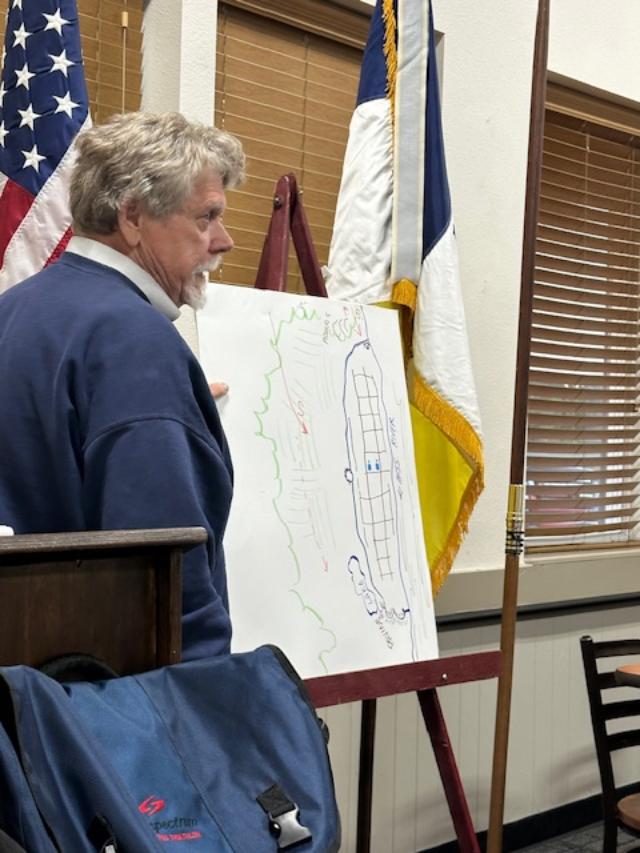
The site where Fort San Carlos stood is at the corner of Fourth and Walnut Street in St. Louis. A local organization, the Commemoration Committee for the Battle of Fort San Carlos, annually commemorates the event by reading out the names of the 21 people who lost their lives during the battle.
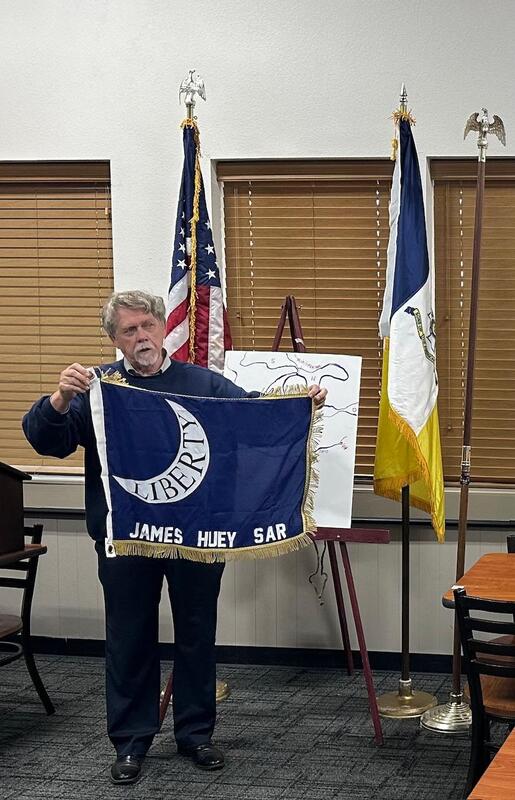
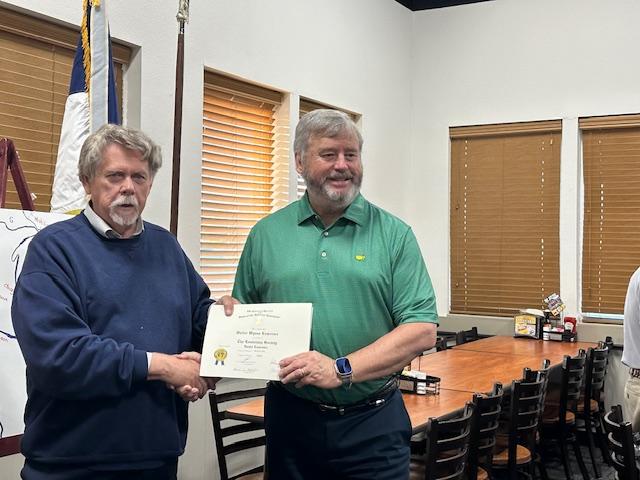
During our meeting, our Chapter also unveiled the Chapter Guidon and new pole and presented our newest member, Compatriot Wynn Lawrence who joined under his patriot ancestor, Daniel Lawrence, of New York who was a Lieutenant in Captain John F Hamtramek's Company in the 5th NY Regiment under the command of Colonel Lewis Dubois. Lt. Lawrence was captured in 1777.