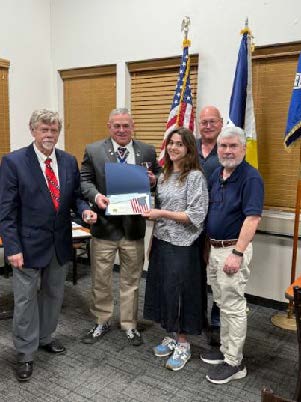
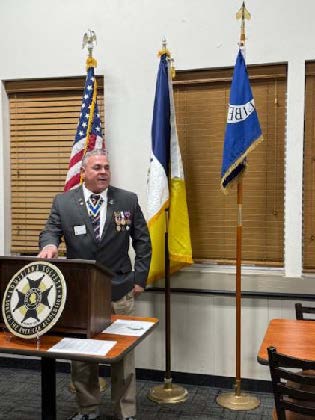
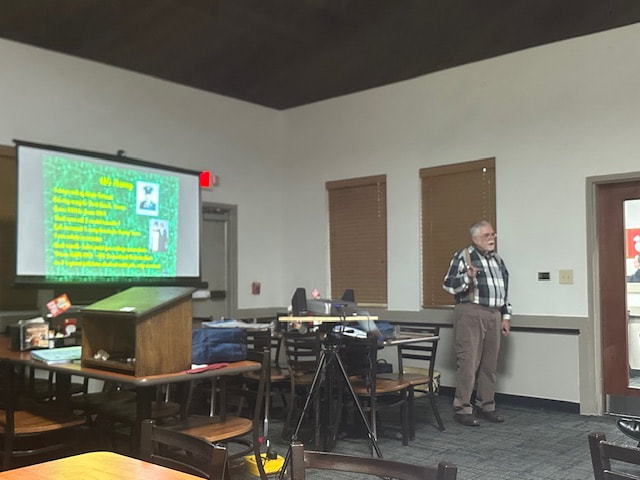
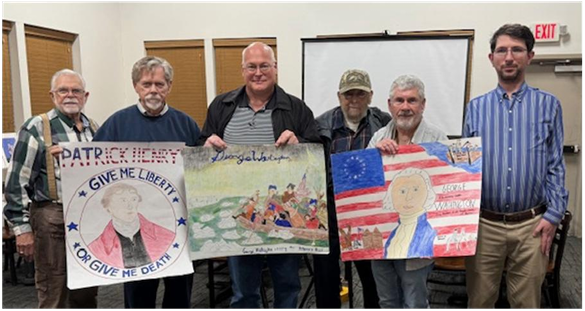
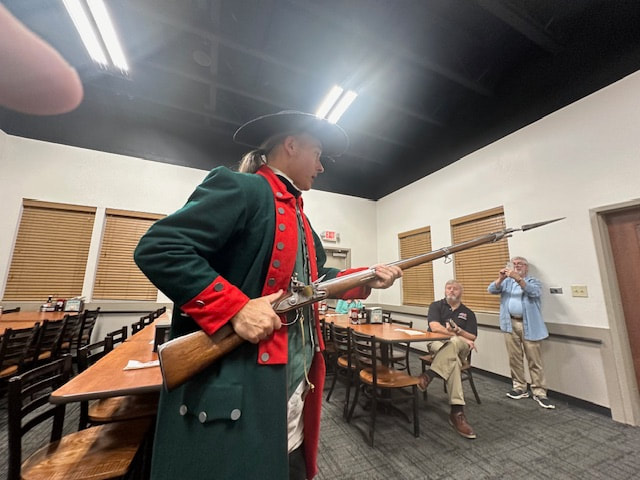
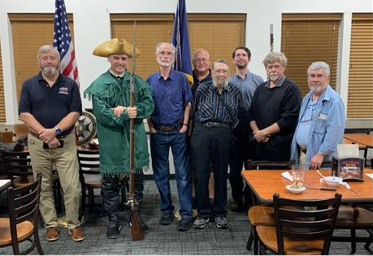
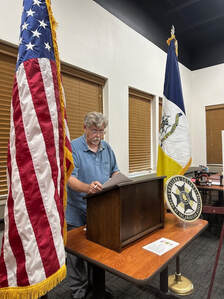
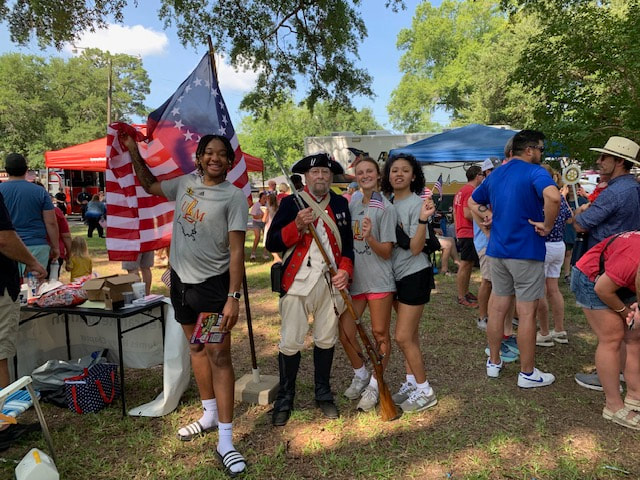
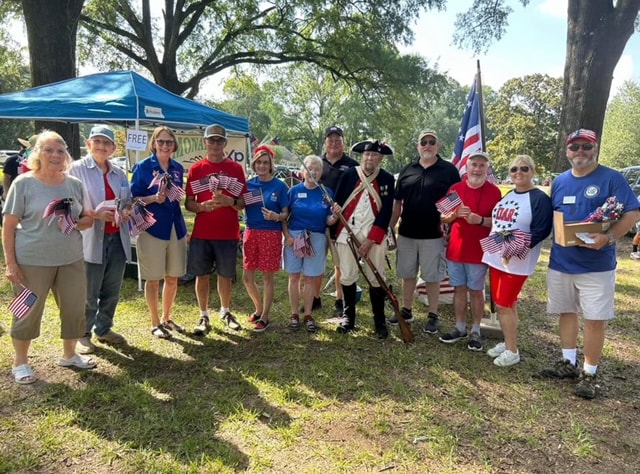
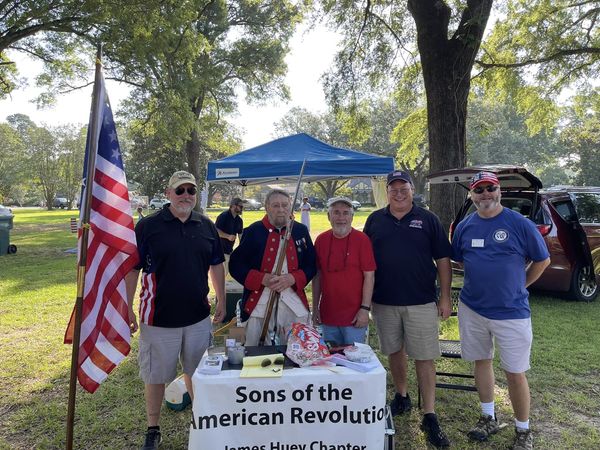
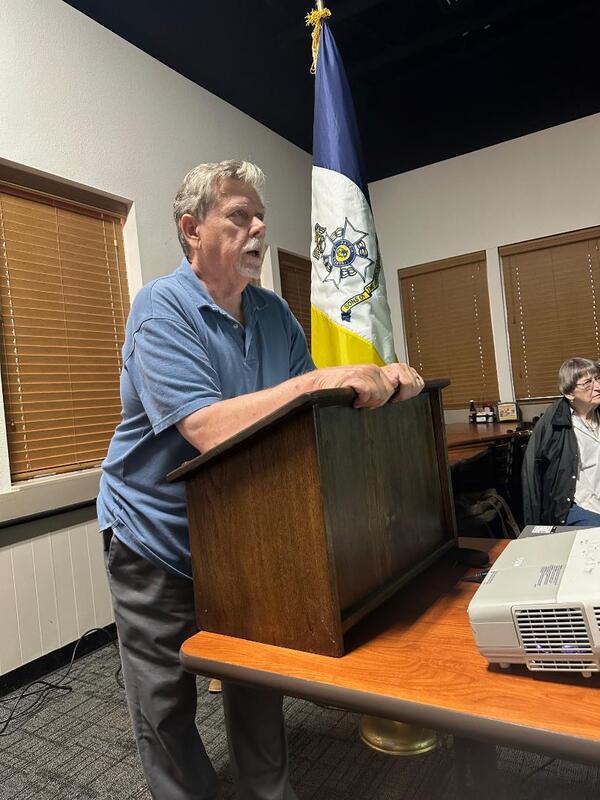
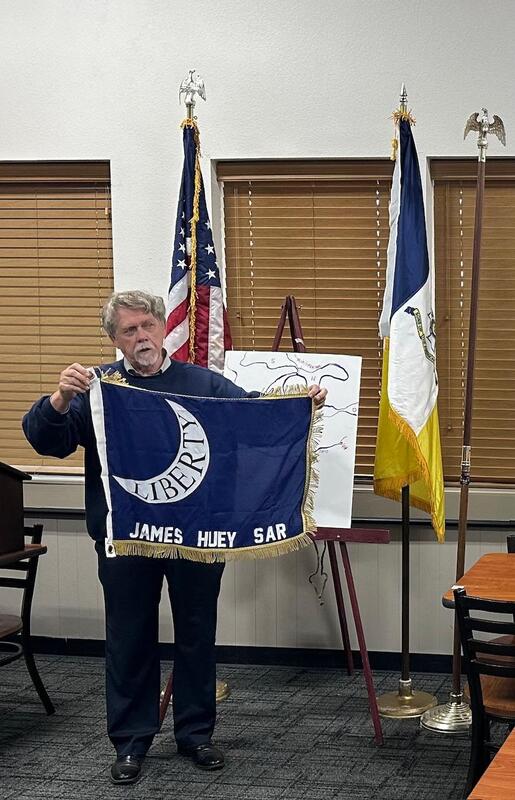
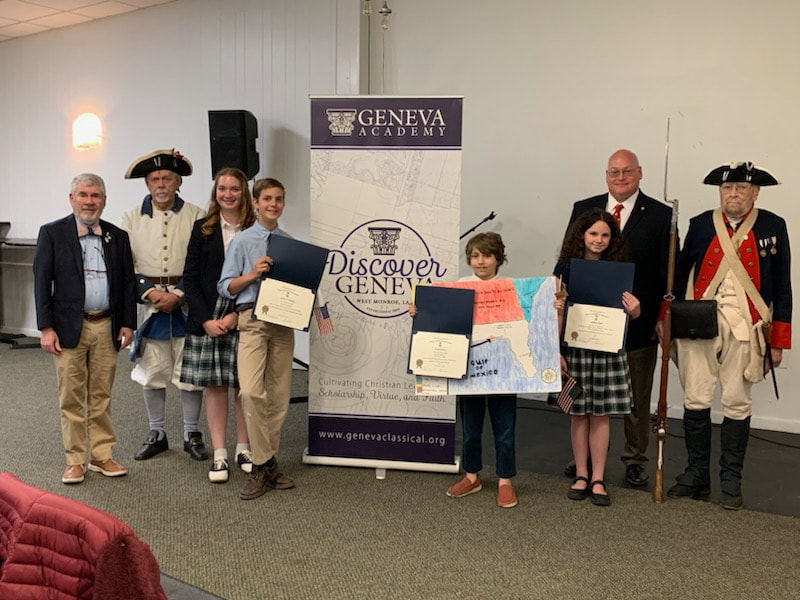
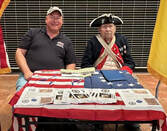
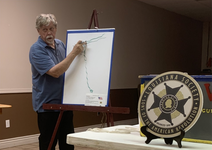
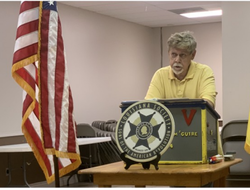
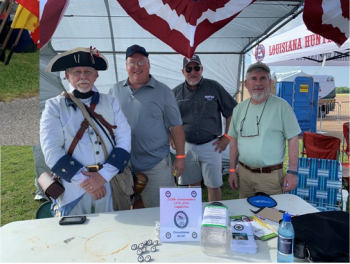
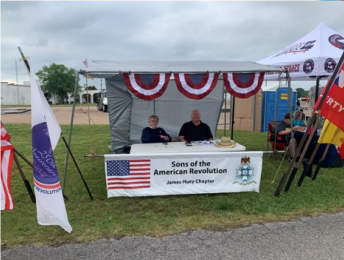
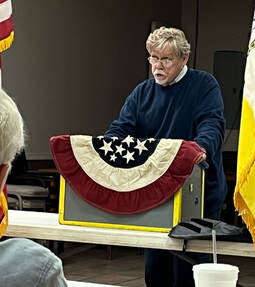
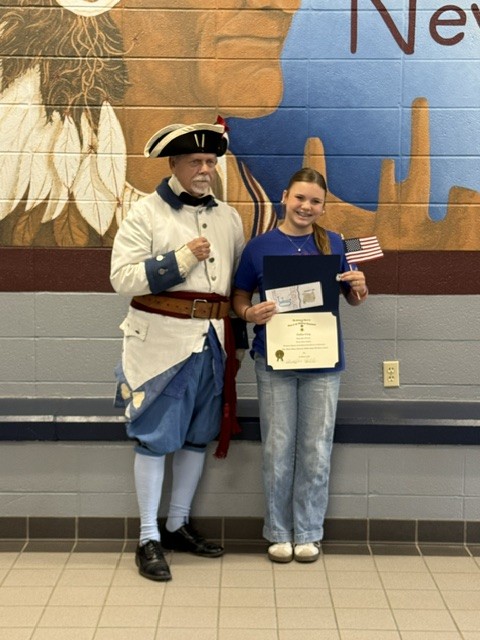
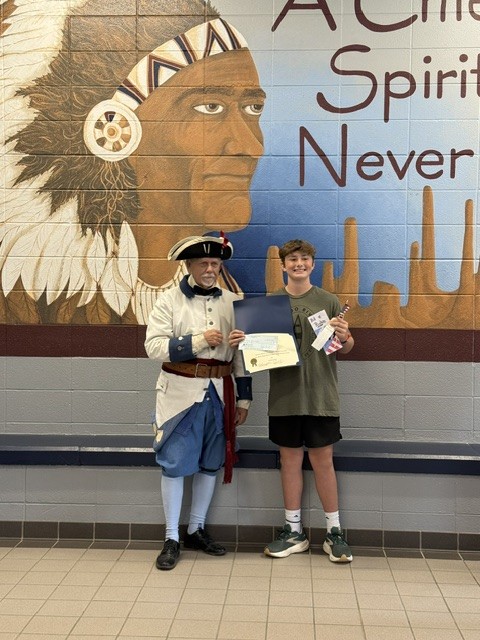
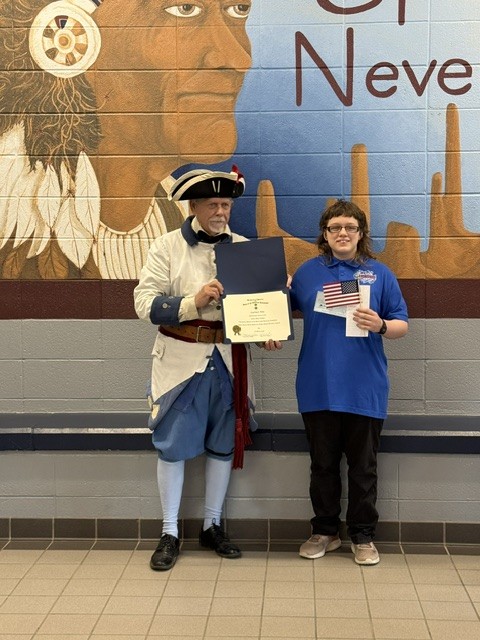
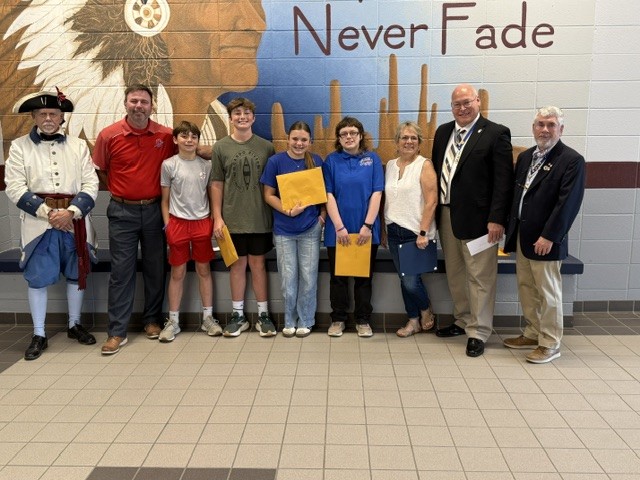
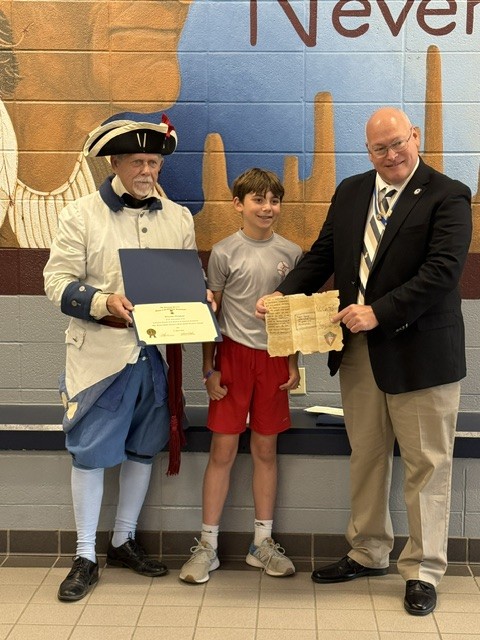
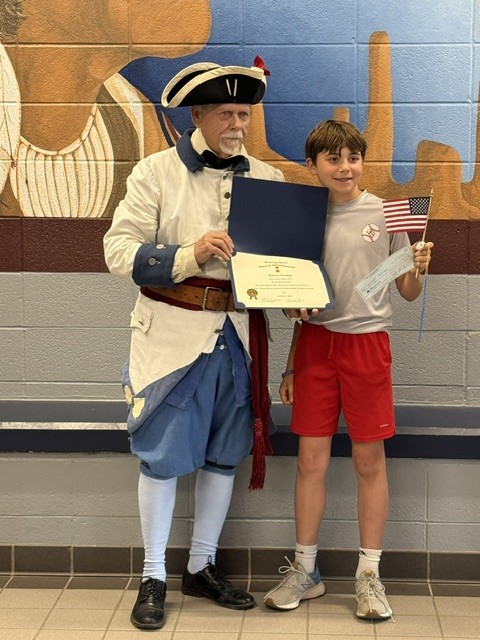
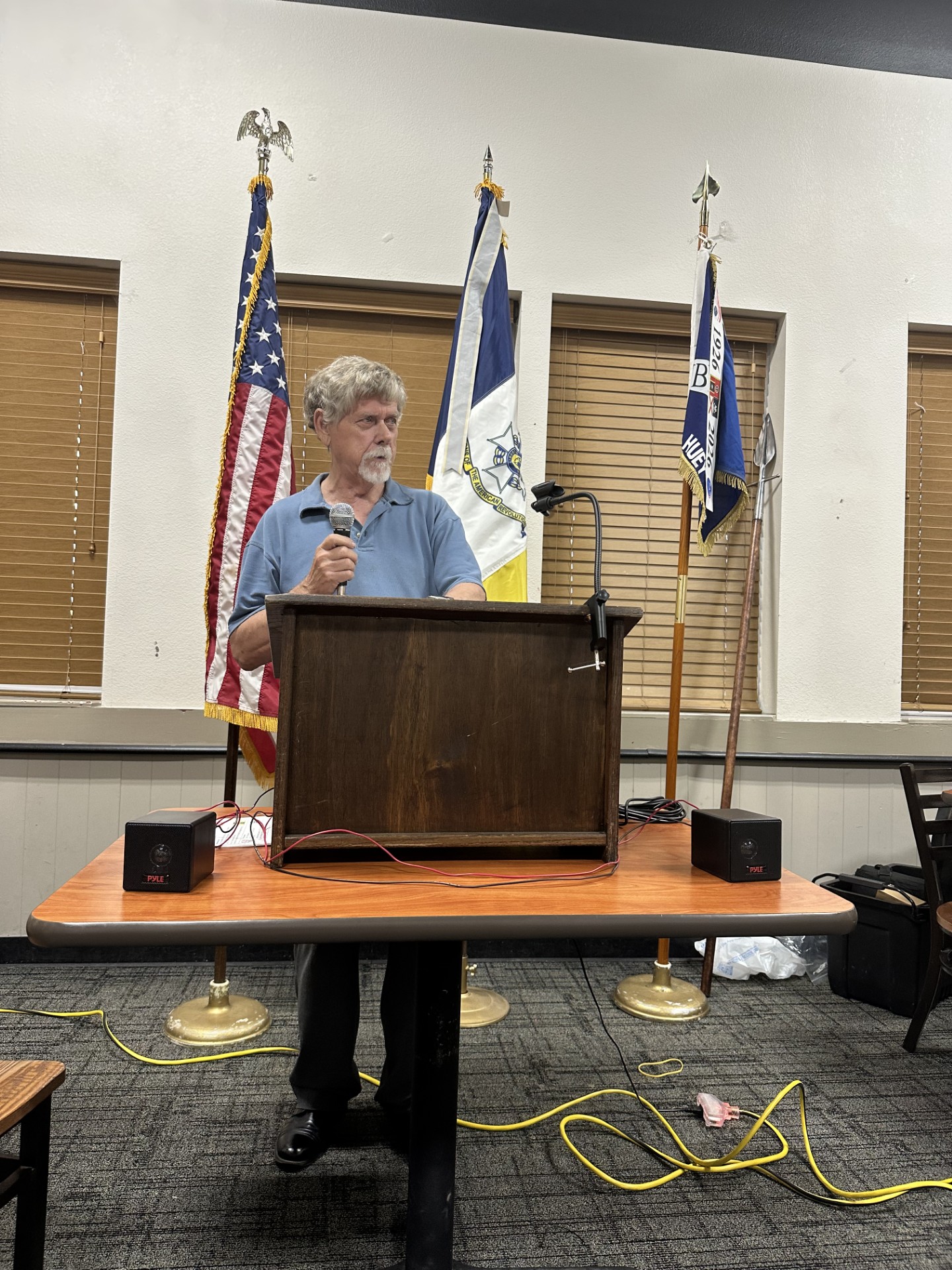
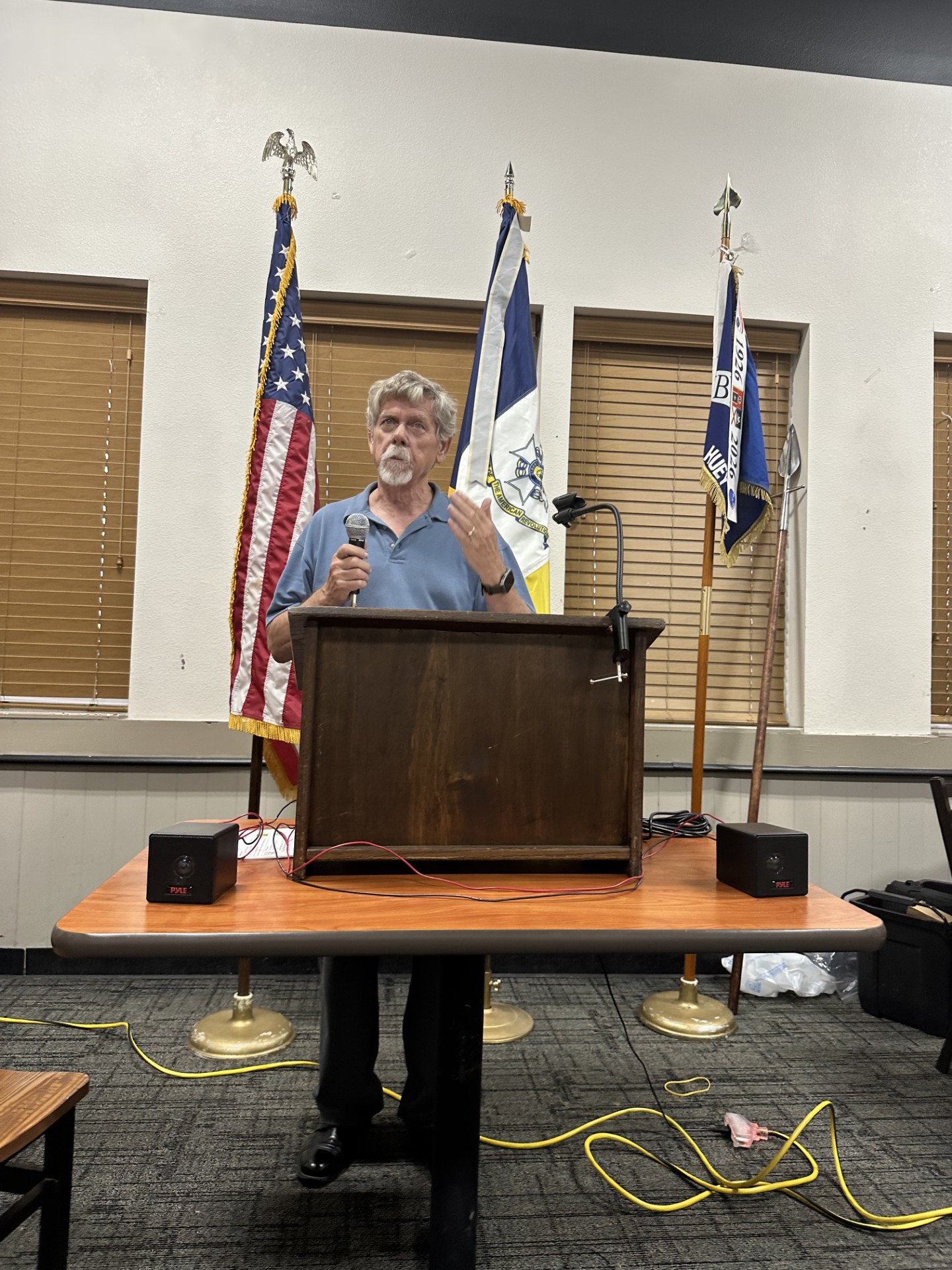
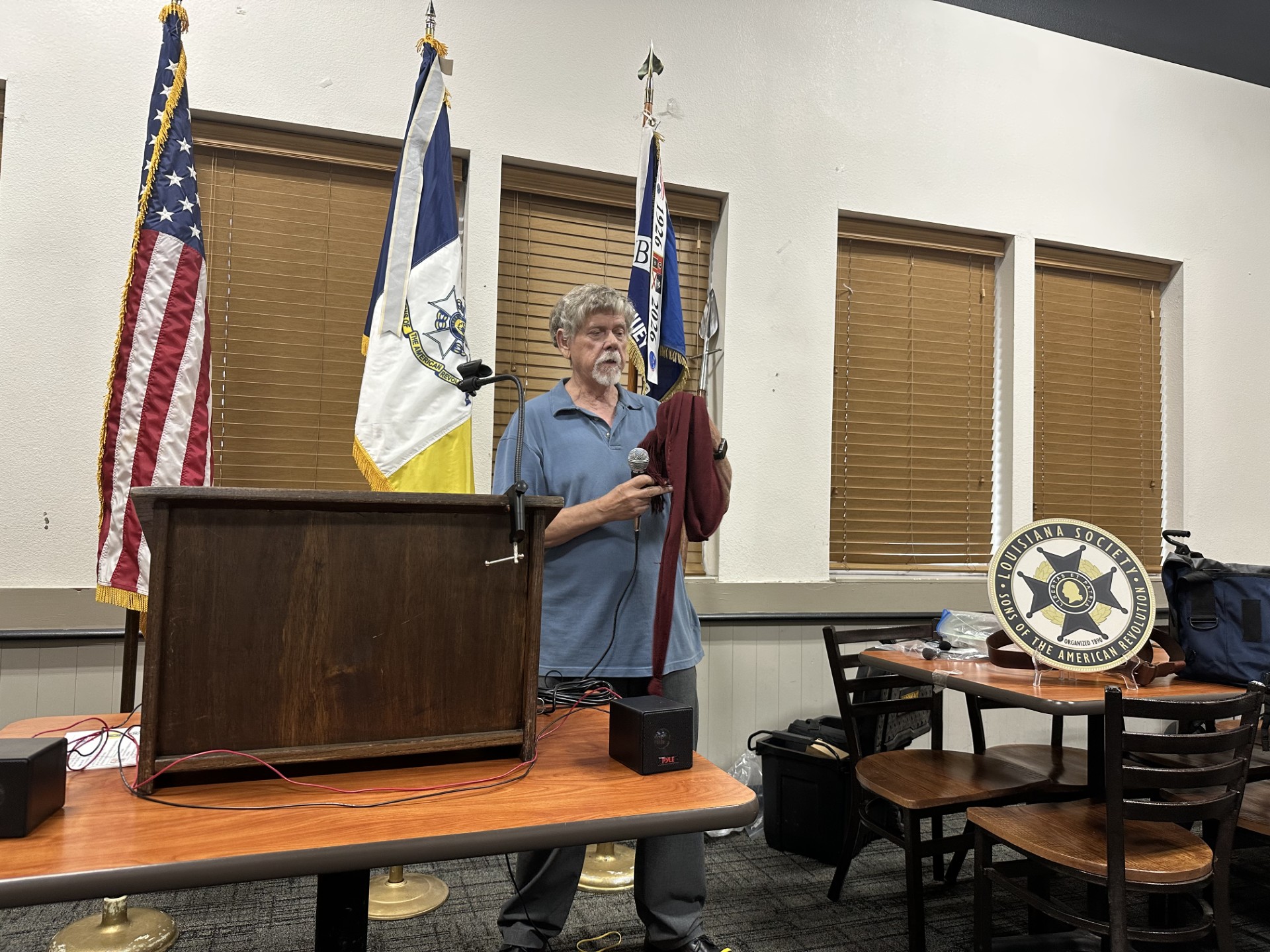
The James Huey Chapter’s May meeting featured an outstanding presentation by Chapter President Ted Brode on the accoutrements and insignia used by officers during the American Revolutionary War. These items were not only functional but also served as essential visual markers, helping soldiers identify their commanders amid the smoke and confusion of battle.
The Spontoon
One of the most distinctive symbols of an officer’s authority was the spontoon (also known as an espontoon or half‑pike). Originating in Europe in the mid‑17th century, the spontoon was shorter than a traditional pike—typically 6 to 9 feet long—and featured a broad blade with crossbars (or lugs) that gave it a trident‑like profile. Although it could be used as a weapon, by the Revolutionary era its primary purpose was ceremonial, signaling rank and leadership on the field.
The Officer’s Hanger
Many officers also carried a hanger, a short, curved sword similar to a cutlass. With blades usually ranging from 18 to 26 inches, hangers were lighter and more practical than full‑length infantry swords, making them suitable for daily wear. Evolving from European hunting swords and backswords, the hanger often complemented—or in some cases replaced—the spontoon.
The Officer’s Sash
A brightly colored sash, worn either around the waist or diagonally across the chest, served as another key identifier. Its vivid color allowed troops to spot their officers even in poor visibility. Sashes had been part of European military tradition since the 17th century and often reflected an officer’s unit or rank.
The Gorget
The gorget, a small crescent‑shaped metal plate worn at the throat, originated as a piece of protective armor. By the time of the American Revolution, it had become largely ceremonial. British officers commonly wore gorgets engraved with “GR” (Georgius Rex) or the royal coat of arms. While less common among Continental officers, some who had previously served in British units continued the practice.
Other Insignia
Additional markers of rank included shoulder epaulettes, hat cockades, and decorative sword knots. Together, these elements formed a visual system of authority that was indispensable in an age before standardized uniforms and modern communication.
President Brode’s presentation was both informative and engaging, offering members a richer understanding of how officers appeared and exercised command during the struggle for American independence.